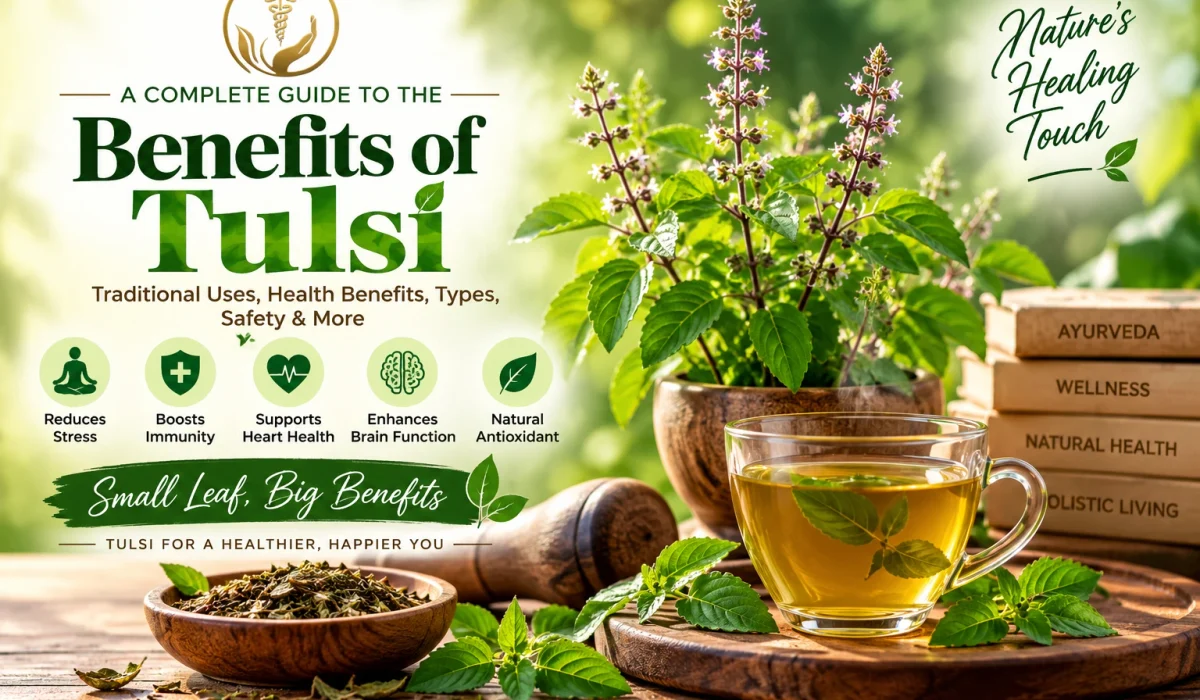
Benefits of Tulsi: Health Benefits, Uses, Tulsi Tea and More
Introduction
Tulsi, also known as Holy basil, is one of the most respected medicinal herbs in Ayurveda and traditional Indian medicine. Scientifically known as Ocimum tenuiflorum and historically referred to as Ocimum sanctum, tulsi has been used for centuries as a medicinal plant, household herb, and sacred plant.
The growing interest in the benefits of tulsi is not surprising. Modern lifestyles expose people to many forms of stress, including physical stress, psychological stress, metabolic stress, chemical stress, and environmental stress. At the same time, lifestyle-related chronic diseases such as diabetes, hypertension, obesity, and cardiovascular disease are becoming increasingly important health concerns.
Tulsi is traditionally described as an adaptogen, meaning an herb believed to help the body respond to stress and maintain homeostasis, or physiological balance. Modern research has investigated tulsi for its potential antioxidant, anti-inflammatory, antimicrobial, immunomodulatory, metabolic, cardiovascular, and neuroprotective properties.
However, it is important to understand the difference between traditional use and proven medical treatment. Research into tulsi is promising, but the strength of evidence varies considerably depending on the health benefit, preparation, dosage, and study design. A systematic review of human studies found promising results in areas such as stress, metabolic health, cardiovascular health, immunity, and neurocognition, while also highlighting the need for more clinical research.
In this guide, we explore the major benefits of tulsi, its traditional uses, tulsi tea, different varieties, possible health applications, safety precautions, and how tulsi can fit into a healthy lifestyle.
What Is Tulsi?
Tulsi is an aromatic medicinal herb belonging to the Lamiaceae family, which includes several familiar herbs such as mint and basil. It is widely cultivated throughout India and other warm regions.
The plant is particularly important in Ayurveda, where it has traditionally been used as a medicinal herb and as part of Rasayanas, a category of traditional preparations associated with maintaining vitality and supporting overall well-being.
Tulsi contains numerous naturally occurring plant compounds. These include phenolic compounds, flavonoids, terpenes, and other phytochemicals. Eugenol is one of its best-known compounds, while other constituents include rosmarinic acid, ursolic acid, and various aromatic compounds. The exact chemical composition can vary according to the variety, cultivation conditions, climate, harvesting method, and processing technique.
This variation is important because fresh tulsi leaves, dried leaves, tea, powders, and standardized extracts should not automatically be considered equivalent.
Types of Tulsi
Three varieties are commonly discussed in traditional use.
Rama Tulsi
Rama tulsi generally has green leaves and a relatively mild aroma. It is commonly grown around homes and used for herbal preparations and tulsi tea.
Krishna Tulsi
Krishna tulsi usually has darker or purplish leaves and a stronger aroma. It is widely recognized in traditional Indian practices.
Vana Tulsi
Vana tulsi is another recognized variety of holy basil. Studies have found chemical differences between tulsi cultivars, including differences in essential-oil composition and compounds such as eugenol.
Because plant chemistry can vary, proper botanical identification, cultivation, harvesting, preservation, and storage are important when producing medicinal herbs.
Why Is Tulsi Called an Adaptogen?
One of the most frequently discussed characteristics of tulsi is its potential adaptogenic activity.
An adaptogen is generally described as a substance that may help an organism adapt to stress and support physiological balance. Tulsi has traditionally been described as an adaptogenic herb in Ayurveda.
Stress, however, is not only emotional.
The body can experience several forms of stress, including:
- Physical stress from intense physical exertion or physical restraint
- Psychological stress from emotional pressure or ongoing mental demands
- Metabolic stress associated with disrupted metabolic processes
- Chemical stress from certain chemicals
- Toxicant stress from pollutants and environmental contaminants
- Infectious stress associated with immune responses to pathogens
- Cold exposure
- Noise-induced stress
- Environmental stress
Experimental research has investigated tulsi in relation to several of these stress models. However, laboratory and animal research should not be interpreted as proof that tulsi protects humans from toxic chemicals, heavy metals, radiation, or other environmental hazards.
For everyday wellness, a more practical approach is to view tulsi as one possible component of a healthy lifestyle that also includes nutritious food, regular physical activity, adequate sleep, stress management, and appropriate healthcare.
15 Potential Benefits of Tulsi
1. Tulsi May Help Support Stress Management
Stress support is one of the most interesting potential benefits of tulsi.
In Ayurveda, tulsi has traditionally been used to support resilience and general well-being. Modern human research has also investigated standardized tulsi preparations in people experiencing stress.
A controlled clinical study reported improvements in symptoms associated with general stress after participants used a standardized tulsi preparation. A broader review of human studies also identified research involving psychological stress and neurocognitive outcomes.
These findings are encouraging, but tulsi should not be considered a cure for chronic stress, anxiety, or depression.
Instead, tulsi can be part of a broader anti-stress lifestyle that includes:
- Regular exercise
- Healthy nutrition
- Adequate sleep
- Yoga
- Meditation
- Relaxation techniques
- Time in nature
- Social connection
- Professional support when necessary
For some people, drinking warm tulsi tea can become a simple and enjoyable part of a relaxing evening routine.
2. Tulsi Has Antioxidant Properties
Another important area of research involves the antioxidant activity of tulsi.
Our bodies naturally produce reactive molecules called free radicals. When free radicals become excessive relative to the body’s antioxidant defenses, oxidative stress can occur.
The body has several natural antioxidant systems, including:
- Glutathione
- Superoxide dismutase
- Catalase
- Other antioxidant enzymes and molecules
Tulsi contains several plant compounds that have demonstrated antioxidant activity in laboratory and experimental studies. Eugenol and other phytochemicals have received particular scientific interest.
This potential antioxidant effect may partly explain why tulsi is being investigated for its broader biological effects.
However, antioxidant activity observed in a laboratory does not automatically prove that drinking tulsi tea prevents chronic disease.
A balanced diet containing fruits, vegetables, legumes, nuts, seeds, and whole grains remains an important foundation for obtaining dietary antioxidants.
3. May Support a Healthy Immune Response
Tulsi has been studied for possible immunomodulatory properties. In simple terms, researchers are investigating whether compounds in tulsi can influence aspects of the body’s immune response.
Tulsi has also demonstrated various forms of antimicrobial activity in laboratory studies, including potential:
- Antibacterial activity
- Antiviral activity
- Antifungal activity
- Antiprotozoal activity
- Antimalarial activity
- Anthelmintic activity
These findings have contributed to the long-standing interest in tulsi as a medicinal herb.
However, much of this evidence comes from laboratory or animal studies. A laboratory effect against a microorganism does not mean that consuming tulsi will treat an infection in humans.
Tulsi should therefore not replace antibiotics, antiviral medicines, vaccines, or medical treatment.
4. May Support Healthy Blood Glucose
Research has also examined tulsi in relation to blood glucose, diabetes, and metabolic health.
One randomized crossover study investigated holy basil leaves in adults with non-insulin-dependent diabetes. Researchers reported reductions in fasting and post-meal blood glucose during the tulsi treatment period, along with a modest reduction in total cholesterol.
These findings have contributed to interest in tulsi and:
- Diabetes
- Insulin resistance
- Metabolic syndrome
- Blood glucose regulation
- Obesity
- Lipid profiles
However, evidence remains limited.
People with diabetes should not stop prescribed medication and replace it with tulsi. If you take glucose-lowering medication, discuss regular use of concentrated tulsi supplements with a healthcare professional.
5. May Support Blood Pressure and Heart Health
Potential cardiovascular benefits are another area of scientific interest.
Researchers have investigated tulsi for possible effects involving:
- Blood pressure
- Cholesterol
- Lipid profiles
- Oxidative stress
- Inflammation
- Metabolic health
These areas are particularly important because high blood pressure, high cholesterol, obesity, diabetes, and cardiovascular disease often occur together.
Tulsi has therefore been investigated for potential cardioprotective and anti-hypertensive effects.
However, research does not currently justify treating tulsi as a replacement for prescribed blood-pressure or cholesterol medication. More high-quality human trials are needed to establish its clinical effectiveness.
Healthy lifestyle practices remain essential. Regular exercise, a balanced diet, maintaining a healthy weight, avoiding tobacco, and following medical advice are much more established approaches to cardiovascular health.
6. May Have Anti-Inflammatory Activity
Inflammation is a normal biological response that helps the body respond to injury and infection. Problems can occur when inflammatory processes remain elevated over long periods.
Tulsi has demonstrated anti-inflammatory activity in laboratory and experimental studies.
Researchers have investigated compounds such as eugenol and their possible effects on pathways involving:
- Cyclooxygenase
- Lipoxygenase
- Arachidonic acid metabolism
- Inflammatory mediators
This research may help explain some of tulsi’s traditional applications.
However, laboratory activity should not be confused with a proven clinical effect. Drinking tulsi tea should not be considered a treatment for inflammatory diseases.
7. May Support Digestive Health
Tulsi has traditionally been used to support digestion and general stomach comfort.
Many people drink tulsi tea after meals because it is a simple herbal beverage with a pleasant aroma.
Experimental research has also explored possible anti-ulcer activity, gastroprotective effects, and analgesic activity.
Still, there is not enough clinical evidence to recommend tulsi as a treatment for ulcers, acid reflux, inflammatory bowel disease, or other diagnosed digestive conditions.
If digestive symptoms are persistent or severe, consult a healthcare professional rather than relying exclusively on herbal remedies.
8. May Support Oral Health
Tulsi’s antimicrobial activity has generated interest in oral health.
Researchers have investigated tulsi and microorganisms associated with oral conditions, including Streptococcus mutans, a bacterium associated with dental caries.
Traditional uses have included tulsi preparations for:
- Oral health
- Gum disease
- Bad breath
- Mouth ulcers
- General oral hygiene
Researchers have also investigated tulsi extracts for potential use in products such as mouthwash.
However, tulsi should not replace brushing, flossing, professional dental examinations, or clinically recommended treatment.
9. May Support Skin Health and Wound Healing
The antioxidant and antimicrobial properties of tulsi have encouraged research into potential dermatological applications.
Experimental research has explored tulsi in relation to:
- Wound healing
- Inflammation
- Antioxidant protection
- Microbial control
- Skin health
Traditional medicine has used various medicinal herbs for topical applications. However, evidence supporting tulsi as a treatment for specific skin diseases remains limited.
If you use a concentrated tulsi extract or essential oil on your skin, appropriate dilution and professional guidance are important because concentrated plant products may cause irritation.
10. May Support Cognitive Function and Memory
Another emerging area is the possible relationship between tulsi and cognitive function.
Research has investigated tulsi in relation to:
- Memory
- Memory enhancement
- Cognitive enhancement
- Forgetfulness
- Mental stress
- Neuroprotection
- Sleep problems
- Exhaustion
Some experimental studies have reported potential neuroprotective and anxiolytic effects.
However, these findings do not mean that tulsi can treat dementia, depression, anxiety disorders, or other neurological conditions.
If someone experiences persistent memory problems, significant forgetfulness, depression, severe anxiety, or major changes in sleep, professional evaluation is important.
11. May Have Hepatoprotective Properties
The liver plays an important role in metabolism and the processing of many substances.
Researchers have investigated the potential hepatoprotective properties of tulsi in experimental models. This has contributed to interest in tulsi and liver health.
Tulsi is also sometimes promoted online as a “detox” herb.
It is important to be cautious with this terminology. The liver and kidneys already perform complex physiological processes involved in metabolism and elimination. There is not sufficient evidence to claim that drinking tulsi can “detox” the body from every toxin.
Tulsi should not be used as a treatment for liver disease.
12. May Have Antimicrobial Applications
The antimicrobial properties of tulsi are among the most widely investigated areas of its pharmacological profile.
Laboratory research has explored potential activity against various microorganisms, including bacteria, fungi, and other pathogens.
This has created interest in possible applications involving:
- Herbal medicine
- Food preservation
- Oral-care products
- Natural antimicrobial formulations
- Hand sanitizer research
- Agricultural applications
But laboratory antimicrobial activity is not equivalent to a clinically approved disinfectant.
Tulsi preparations should not be used as a substitute for regulated hand sanitizers, drinking-water purification systems, or established food-safety procedures.
13. May Support the Body’s Response to Environmental Stress
Researchers have investigated tulsi in experimental models involving environmental stressors such as toxicants and pollutants.
These studies have included exposure models involving substances such as:
- Lead
- Arsenic
- Cadmium
- Chromium
- Mercury
- Pesticides
- Industrial pollutants
- Other toxic chemicals
Research has also explored possible radioprotective activity.
These findings are scientifically interesting, but they should not be interpreted as evidence that tulsi can protect people from dangerous exposure.
If someone is exposed to heavy metals, radiation, pesticides, or toxic chemicals, the appropriate response is to remove the source of exposure and seek professional medical advice.
14. May Have Anti-Allergic and Other Biological Effects
Tulsi has also been investigated for possible anti-allergic effects.
Researchers are interested in whether certain compounds may influence immune and inflammatory pathways associated with allergic responses.
Other experimental research has examined potential analgesic, anti-ulcer, antimicrobial, and other pharmacological actions.
The wide range of effects studied demonstrates why tulsi is an interesting medicinal plant, but it does not mean that every traditional claim has been clinically established.
15. May Complement a Healthy Lifestyle
Perhaps the most practical way to use tulsi is as part of a broader healthy lifestyle.
Rather than expecting one herb to prevent chronic diseases, think about how multiple healthy habits work together.
These include:
- Eating a balanced diet
- Exercising regularly
- Practicing yoga
- Getting adequate sleep
- Managing psychological stress
- Maintaining healthy body weight
- Avoiding tobacco
- Limiting excessive alcohol
- Spending time outdoors
- Maintaining social relationships
- Following preventive healthcare recommendations
Tulsi tea can be one small part of this routine.
Tulsi Tea: Benefits and How to Prepare It
Tulsi tea is one of the simplest ways to consume holy basil.
Pure tulsi tea is generally caffeine-free, making it different from coffee, black tea, and green tea.
Simple Tulsi Tea Recipe
To make tulsi tea:
- Wash several fresh tulsi leaves.
- Add them to hot water.
- Allow the leaves to steep for several minutes.
- Strain the tea if preferred.
- Drink it warm.
You can add ginger, lemon, or a small amount of honey for flavor.
There is no scientifically established “best time” to drink tulsi tea. Some people prefer it in the morning, while others enjoy it after meals or in the evening.
Tulsi vs. Coffee, Green Tea, and Black Tea
| Beverage | Caffeine | Common reason people choose it |
| Tulsi tea | Usually caffeine-free | Herbal beverage and relaxation |
| Coffee | Usually high | Energy and alertness |
| Black tea | Moderate | Flavor and alertness |
| Green tea | Moderate | Flavor and naturally occurring polyphenols |
If you are sensitive to caffeine or want a warm beverage before bedtime, tulsi tea may be a convenient alternative.
However, caffeine affects people differently. The right beverage depends on your preferences and overall lifestyle.
How to Consume Tulsi
There are several ways to consume tulsi.
Fresh Tulsi Leaves
Fresh leaves can be washed and consumed in small amounts or added to beverages.
Tulsi Tea
Tea is one of the most popular and convenient preparations.
Tulsi Powder
Dried leaves can be processed into powder and added to selected foods or beverages.
Tulsi Extracts
Capsules and standardized extracts contain more concentrated quantities of plant compounds.
These products can differ significantly from fresh leaves or tea.
For herbal products, quality assurance is important. Botanical identification, cultivation, harvesting, preservation, extraction, and storage can all affect the final product.
Modern analytical techniques such as high-performance liquid chromatography (HPLC) can help identify and quantify specific plant compounds.
How Many Tulsi Leaves Can You Eat Per Day?
There is no universally established number of fresh tulsi leaves that has been scientifically proven to be ideal for everyone.
Traditional use varies, while clinical studies have used different preparations and doses.
For normal dietary use, moderation is sensible. Concentrated supplements should be taken according to the manufacturer’s instructions and, when appropriate, professional medical advice.
More is not necessarily better when consuming medicinal herbs.
Best Time to Consume Tulsi
In the Morning
Tulsi tea can be a refreshing, caffeine-free beverage in the morning. It can easily be combined with other healthy habits such as hydration, breakfast, exercise, or meditation.
After Meals
Some people traditionally consume tulsi tea after meals as part of a digestive routine.
Before Bed
Because pure tulsi tea is naturally caffeine-free, it can be used as part of a relaxing evening routine.
However, there is no scientific evidence establishing one universally superior time to consume tulsi.
Tulsi, Ayurveda, and Traditional Medicine
Tulsi has a particularly important place in Ayurveda lifestyle medicine.
Ayurveda traditionally emphasizes the relationship between food, daily habits, mental well-being, environment, sleep, physical activity, and medicinal herbs.
Tulsi is often associated with Rasayanas, which traditionally focus on maintaining vitality and resilience.
Modern holistic health approaches share some similar concepts. Practices such as yoga, meditation, mindful eating, time in nature, and healthy sleep can all contribute to well-being.
Still, traditional medicine and modern medicine should not be treated as identical systems. Herbal traditions provide valuable knowledge about medicinal plants, while modern clinical research helps determine which specific health claims are supported by evidence.
Tulsi and Hinduism: Why Is Tulsi Sacred?
Tulsi has cultural significance beyond its medicinal properties.
For many Hindus, tulsi is a sacred plant associated with spiritual practices and religious rituals. Tulsi plants have traditionally been grown around homes and temples.
This relationship creates a meaningful nature connection.
In modern urban environments, people may spend less time around plants and natural environments. This has contributed to discussions about “nature deficit” and the importance of reconnecting with nature.
Caring for a tulsi plant can therefore have cultural, environmental, and personal significance independent of any specific medical claim.
Sustainable Tulsi Cultivation
The growing demand for medicinal herbs also creates questions about sustainable agriculture.
Tulsi can be cultivated using approaches such as:
- Organic cultivation
- Organic farming
- Ecological farming
- Sustainable agriculture
- Responsible harvesting
- Environmentally conscious processing
Sustainable medicinal-plant production can potentially support:
- Rural livelihoods
- Rural communities
- Food security
- Sustainable development
- Environmental health
- Ecological sustainability
However, responsible cultivation requires more than increasing production.
Farmers need fair prices, reliable markets, appropriate agricultural practices, and access to quality planting material.
Ethical farming and fair trade can help ensure that growing demand for medicinal plants supports rural communities rather than contributing to rural poverty or environmental degradation.
Climate change is also relevant. Changes in temperature, rainfall, soil conditions, and pest pressure can affect tulsi cultivation and potentially influence the concentration of plant compounds.
Quality, Cultivation, and Storage of Tulsi
The quality of a tulsi product can depend on many factors.
These include:
- Botanical identification
- Variety
- Soil quality
- Cultivation methods
- Climate
- Harvesting time
- Drying
- Preservation
- Storage
- Extraction methods
- Manufacturing standards
The chemical composition of tulsi can vary between varieties and growing conditions. Research has identified differences in essential-oil profiles among cultivars.
For commercial herbal medicine, quality assurance is therefore essential.
Manufacturers may use analytical methods such as HPLC to measure specific compounds and improve batch-to-batch consistency.
Consumers should be cautious of products that make extreme claims such as “cures cancer,” “removes all heavy metals,” or “replaces diabetes medicine.”
Tulsi and Chronic Diseases
Tulsi is increasingly discussed in relation to lifestyle-related chronic diseases.
These include:
- Diabetes
- Hypertension
- Obesity
- Hypercholesterolemia
- Metabolic syndrome
- Cardiovascular disease
- Stroke
- Cancer
- Dementia
- Depression
- Anxiety
It is important to understand that tulsi has not been proven to prevent or cure all of these diseases.
Instead, researchers are investigating whether certain tulsi compounds could influence biological pathways related to oxidative stress, inflammation, glucose metabolism, lipid profiles, and stress response.
The best approach to chronic disease prevention remains comprehensive.
A healthy lifestyle should include nutritious food, regular physical activity, adequate sleep, stress management, preventive healthcare, and evidence-based treatment when necessary.
Tulsi Side Effects and Precautions
Tulsi has a long history of traditional use, and human studies have generally reported favorable tolerability. However, long-term safety data for all tulsi preparations remain limited.
Possible considerations include digestive discomfort, individual sensitivity, and potential interactions with medicines.
Extra caution is appropriate if you:
- Take diabetes medication
- Take blood-pressure medication
- Take blood-thinning medication
- Have a chronic disease
- Are pregnant
- Are breastfeeding
- Are preparing for surgery
- Are considering concentrated tulsi extracts
Fresh leaves, tea, powders, capsules, and standardized extracts should not be assumed to have identical effects.
If you have a medical condition, consult a qualified healthcare professional before using concentrated tulsi products regularly.
Tulsi should complement—not replace—medical treatment.
Frequently Asked Questions About the Benefits of Tulsi
What are the main benefits of tulsi?
Potential benefits of tulsi include stress support, antioxidant activity, antimicrobial properties, immune support, metabolic health, cardiovascular health, digestive support, and possible cognitive effects. However, the strength of scientific evidence varies across these areas.
Is tulsi an adaptogen?
Tulsi is traditionally considered an adaptogen in Ayurveda. Research has investigated its potential adaptogenic activity, especially in relation to stress. More clinical research is needed to establish specific effects and doses.
Is holy basil the same as tulsi?
Yes. Tulsi is commonly known as Holy basil. Its current botanical name is generally Ocimum tenuiflorum, while Ocimum sanctum is a commonly used synonym.
Can tulsi reduce stress?
Some human research suggests that certain tulsi preparations may help reduce symptoms associated with general stress. However, tulsi should not replace professional treatment for anxiety or depression.
Can I drink tulsi tea every day?
Many people consume tulsi tea regularly. However, there is no universally established optimal daily amount. People taking medication or managing a chronic condition should consult a healthcare professional before regularly using concentrated tulsi products.
Is tulsi good for diabetes?
Some research has found potential effects on blood glucose, but evidence is not sufficient to use tulsi as a replacement for diabetes treatment.
Does tulsi contain caffeine?
Pure tulsi is naturally caffeine-free. However, blended teas may contain green tea, black tea, or other caffeinated ingredients.
Is tulsi good for oral health?
Tulsi has demonstrated antimicrobial activity in laboratory research, including research involving microorganisms relevant to oral health. However, it should not replace normal dental hygiene or professional dental care.
Can tulsi cure cancer?
No. Laboratory and experimental research has investigated potential anti-carcinogenic effects of tulsi compounds, but this does not establish tulsi as a cancer treatment or cure.
Is tulsi good for detoxification?
Tulsi is sometimes marketed as a detox herb, but there is insufficient evidence to claim that it removes all toxins, heavy metals, or pollutants from the human body. Exposure to substances such as lead, arsenic, mercury, pesticides, or industrial pollutants requires appropriate medical advice.
Conclusion
Tulsi is a remarkable medicinal plant with a long history in Ayurveda, traditional medicine, Indian culture, and spiritual practices. Known as Holy basil, Ocimum tenuiflorum has attracted modern scientific interest because of its diverse plant compounds and potential biological activities.
The potential benefits of tulsi include support for stress management, antioxidant activity, antimicrobial activity, immune response, blood glucose regulation, cardiovascular health, digestion, oral health, and cognitive function.
Research has also investigated tulsi’s potential adaptogenic, anti-inflammatory, anti-diabetic, anti-hypertensive, cardioprotective, neuroprotective, hepatoprotective, and immunomodulatory properties.
However, not all claims have the same level of evidence. Some findings come from laboratory and animal research, while human studies remain limited for many proposed benefits. Therefore, tulsi should not be presented as a cure for cancer, diabetes, hypertension, dementia, infections, or other serious diseases.
The most practical approach is to include tulsi as part of a broader healthy lifestyle.
A cup of tulsi tea can be a simple, caffeine-free addition to your daily routine. Combined with balanced nutrition, regular exercise, yoga, sufficient sleep, stress management, and preventive healthcare, it can fit naturally into a holistic approach to well-being.
Tulsi also reminds us that medicinal plants are connected to something larger than individual health. Sustainable cultivation, organic farming, ethical sourcing, fair trade, rural livelihoods, environmental health, and ecological sustainability are increasingly important as demand for herbal raw materials grows.
Ultimately, tulsi is best understood as a traditional medicinal herb with promising scientific potential—not as a miracle cure.
Enjoy tulsi responsibly, use evidence-based healthcare when needed, and make healthy lifestyle practices the foundation of long-term well-being.