Arunachalam Temple: A Spiritual Journey Awaits
Arunachalam Temple, also known as Arunachaleswarar Temple, is one of the most significant temples in India, located in the town of Tiruvannamalai, Tamil Nadu. Dedicated to Lord Shiva, this sacred site represents the element of fire as part of the Pancha Bhoota Stalas. The temple’s historical significance, architectural brilliance, and spiritual importance make it a must-visit destination for pilgrims from all over the world.
In this article, we will explore the historical significance, architectural features, rituals, festivals, and more, providing you with all the essential information for a meaningful pilgrimage to Arunachalam Temple.
Historical Significance of Arunachalam Temple
A Glimpse into Arunachalam Temple’s Origins
Arunachalam Temple has a deep-rooted history that dates back to ancient times. The temple’s origins trace to the Chola dynasty, though records suggest its existence even earlier. Arunachala Hill, located near the temple, is believed to represent Lord Shiva’s manifestation as a column of fire, resolving a cosmic dispute between Lord Brahma and Lord Vishnu. This legend has made this hill and temple sacred to worshippers.
Thus, the temple is not only a place of worship but also a spiritual landmark deeply embedded in the cultural history of Tamil Nadu. Moreover, the Arunachala Hill has long been regarded as a symbol of divine enlightenment.
The Role of Various Dynasties
Over the centuries, several dynasties, including the Pallavas, Cholas, and Vijayanagar rulers, contributed to the growth and grandeur of the temple. Inscriptions on the temple’s walls provide invaluable insights into the societal and political structures of those times, highlighting the influence of these dynasties on the temple’s development. These inscriptions also shed light on Tamil literature, art, and religious practices, making the temple a living chronicle of history.
In addition, the contributions of different rulers helped transform the temple into a spiritual and cultural hub. Over time, the temple has become synonymous with the region’s religious identity.
Association with Spiritual Leaders
The temple has become a vital center for spiritual seekers, particularly due to its connection with Ramana Maharshi, a revered sage who meditated on Arunachala Hill. Ramana Maharshi considered the hill his guru and spent much of his life there. His teachings continue to inspire pilgrims, adding to the temple’s status as a spiritual destination for those seeking enlightenment and inner peace.
Furthermore, Ramana Maharshi’s influence has attracted many to the temple, offering them the opportunity to meditate and reflect on his teachings. As a result, the temple’s spiritual significance has transcended religious boundaries.
Architectural Features of Arunachalam Temple
Dravidian Architecture: A Testament to Craftsmanship
The architectural beauty of Arunachalam Temple stands as a splendid example of Dravidian architecture. The temple complex spans over 25 acres, featuring towering gopurams (gateway towers), mandapams (pillared halls), and numerous shrines. These intricate structures boast stunning carvings that depict mythological scenes, deities, and divine figures. As such, these features give visitors a glimpse into the spiritual and artistic heritage of the region.
The Majestic Annamalaiyar Gopuram
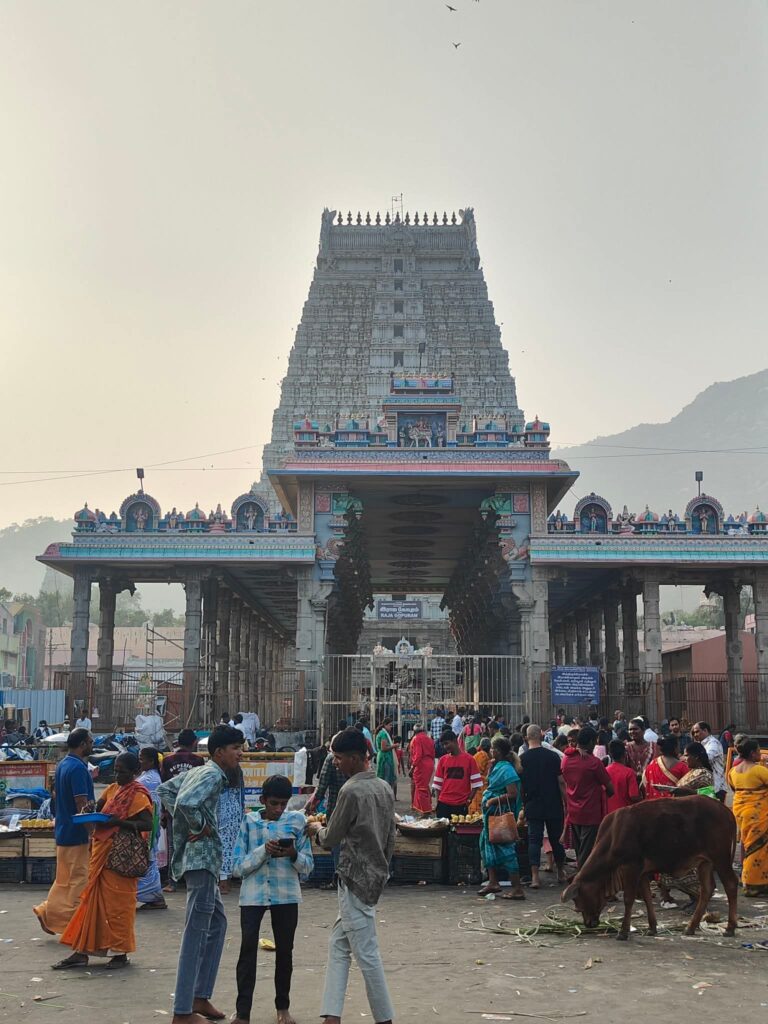
Among the temple’s most striking features is the Annamalaiyar Gopuram, the eastern entrance tower. Standing at 217 feet, this tower ranks as one of the tallest gopurams in India. The carvings adorning the gopuram depict a wide range of divine figures and mythological motifs, symbolizing both the spiritual significance and artistic excellence of the temple. As a result, this gopuram serves as both a visual and spiritual guide for the devotees.
The Thousand-Pillared Hall and Inner Sanctum
Inside the temple, the Kalyana Mandapam (Thousand-Pillared Hall) stands as a masterpiece. Each pillar is elaborately carved with images of gods, goddesses, dancers, and musicians. This hall provides a serene space for devotees to gather, reflect, and participate in religious ceremonies. The Garbhagriha (inner sanctum), where the main deity, Lord Annamalaiyar, resides, serves as a central focus of worship. The temple complex follows the traditional layout of Dravidian temples, ensuring both symmetry and spiritual alignment.
Thus, the temple is a living testament to Tamil architectural excellence and its connection to divine principles.
Cultural Practices and Rituals at Arunachalam Temple
Daily Rituals and Worship
The cultural practices and rituals performed at Arunachalam Temple are deeply rooted in tradition. The day begins with the Suprabhatam (morning prayers), followed by Abhishekam, where the Shiva Lingam receives sacred offerings, such as milk, honey, and other substances. These rituals are accompanied by Vedic chants, which set the tone for the day’s religious activities. In this way, every ritual at the temple offers a meaningful way to connect with the divine.
Girivalam: The Sacred Walk Around Arunachala Hill
One of the most significant rituals at Arunachalam Temple is the Girivalam, or circumambulation of Arunachala Hill. Pilgrims walk barefoot, covering approximately 14 kilometers around the hill, as a form of devotion and spiritual purification. The full moon nights attract thousands of devotees who come to walk along the sacred path. Girivalam is believed to bring immense spiritual benefits and is seen as a way to cleanse the soul and seek divine grace.
Festivals Celebrated at Arunachalam Temple
Karthigai Deepam: The Festival of Lights
The Karthigai Deepam festival is the most famous celebration at Arunachalam Temple. It commemorates the manifestation of Lord Shiva as a column of fire. During this festival, a massive beacon is lit atop Arunachala Hill, symbolizing Lord Shiva’s divine light. The hill and the temple are illuminated by thousands of oil lamps, creating a breathtaking spectacle. This festival not only showcases devotional fervor but also promotes unity among the temple’s visitors.
Maha Shivaratri: A Night of Devotion
Maha Shivaratri, a night dedicated to Lord Shiva, is celebrated with intense devotion. Pilgrims observe fasting and night-long vigils, chanting hymns and mantras to honor Shiva. The temple hosts special pujas and Abhishekam during this sacred night, creating an atmosphere of deep spiritual energy.
Moreover, this night provides an opportunity for self-reflection and spiritual renewal, making it a key event for devotees seeking a closer connection to the divine.
Other Festivals at Arunachalam Temple
In addition to Karthigai Deepam and Maha Shivaratri, the temple also celebrates other major festivals, such as Tamil New Year, Navaratri, Pongal, and Deepavali. Furthermore, each festival brings its own unique set of rituals, processions, and cultural performances, all of which celebrate both religious devotion and the rich cultural heritage of Tamil Nadu. Moreover, these celebrations not only enhance the spiritual atmosphere of the temple but also foster a sense of community and unity among the devotees. As a result, each festival serves as a vivid reminder of the temple’s deep-rooted traditions and its ongoing connection with the people of the region.
Pilgrimage and Visitor Experience
A Journey of Transformation
Visiting Arunachalam Temple is a transformative spiritual journey. Pilgrims come from far and wide to experience the divine energy and serene atmosphere that permeates the temple. The Girivalam circumambulation allows devotees to deepen their spiritual connection with the divine. This walk, often undertaken barefoot, is believed to purify the soul and absolve sins.
In this way, a visit to the temple is not only about worship but also about personal reflection and spiritual growth.
Ramana Ashram and Spiritual Retreats
The Ramana Ashram, situated near Arunachala Hill, offers a peaceful environment for meditation and reflection. Pilgrims can visit the ashram, meditate, and learn from the teachings of Ramana Maharshi, who regarded Arunachala Hill as his guru. His spiritual insights continue to guide seekers on their path toward self-realization.
Nearby Attractions and Points of Interest
While Arunachalam Temple is the main attraction, Tiruvannamalai offers several other points of interest:
Skandashram and Virupaksha Cave
Located on Arunachala Hill, Skandashram is an ancient hermitage where Ramana Maharshi meditated. The Virupaksha Cave also holds great significance, as Ramana Maharshi spent many years meditating in this tranquil cave.
Sathanur Dam and Gingee Fort
For visitors who enjoy nature and history, the Sathanur Dam and Gingee Fort provide enriching experiences. The Sathanur Dam offers a serene setting for relaxation, while Gingee Fort allows history enthusiasts to explore the ruins of a grand fort with stunning architecture.
Tips for Visiting Arunachalam Temple
Best Time to Visit
The best time to visit Arunachalam Temple is between November and February, when the weather is pleasant and ideal for walking the Girivalam. Avoid the summer months, as they can be unbearably hot.
Dress Modestly
As a place of worship, Arunachalam Temple requires visitors to dress modestly. Traditional attire, such as sarees for women and dhotis for men, is preferred. If wearing western clothes, ensure your shoulders and knees are covered.
Stay Hydrated
During the Girivalam, especially in the summer, carry water with you to stay hydrated, as the walk can be strenuous in hot weather.
Respect Temple Customs
Familiarize yourself with the temple’s rituals before your visit. Participate in the daily rituals and maintain a respectful attitude throughout your pilgrimage.
Conservation Efforts and Heritage Preservation
Preserving the Sacred Site
The temple authorities and heritage organizations have undertaken numerous conservation efforts to preserve the temple’s historical structures and spiritual significance. Restoration of ancient sculptures, murals, and temple inscriptions ensures that this sacred site remains intact for future generations.
Conclusion: Embracing the Spiritual Essence of Arunachalam Temple
In conclusion, Arunachalam Temple offers more than just a visit to a religious site. It invites pilgrims and visitors to embark on a transformative spiritual journey. The temple’s historical significance, architectural brilliance, and cultural rituals provide a meaningful experience that resonates deeply with the soul.
By participating in the Girivalam, visiting Ramana Ashram, and immersing yourself in the festivals, you connect with the divine while embracing the timeless heritage of Lord Shiva. A visit to Arunachalam Temple is a profound journey of devotion, self-realization, and spiritual awakening.