Panchakarma and Ayurvedic Herbal Medicine: The Science, Practice, Benefits, and Traditional Healing Approach.
The Science of Ayurvedic Herbal Medicine (Dravyaguna Vijnana)
Panchakarma is closely connected with Ayurvedic herbal medicine. The effectiveness of many Ayurvedic therapies depends on the correct selection, processing, and application of medicinal plants.
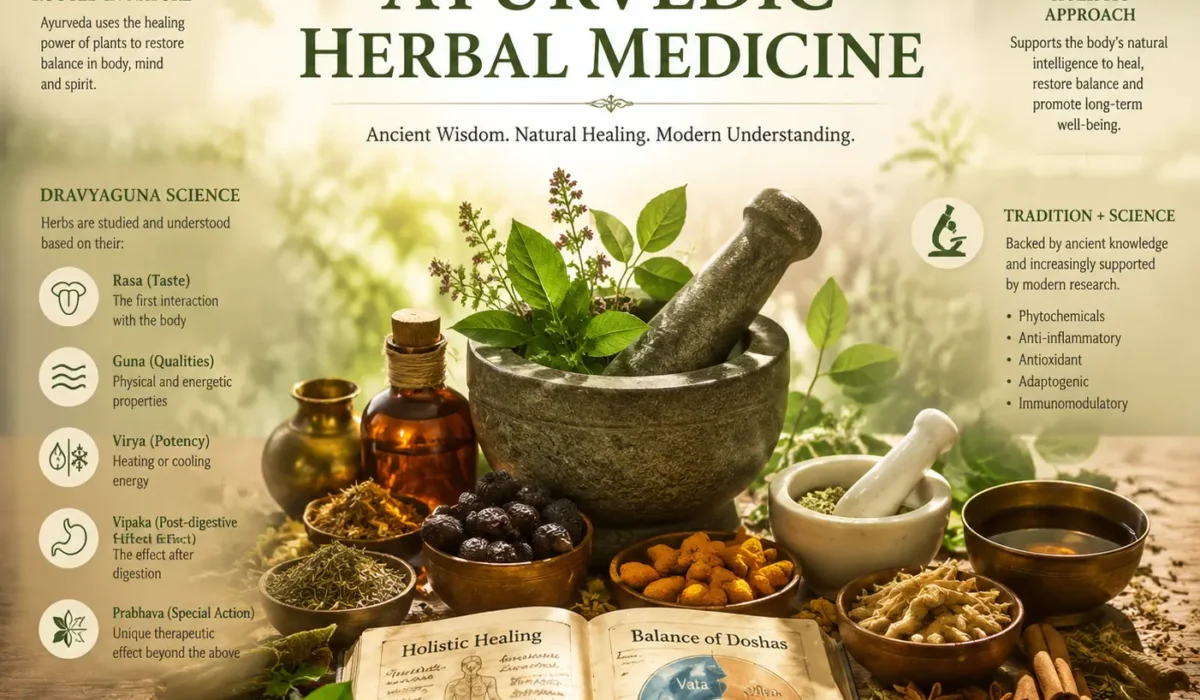
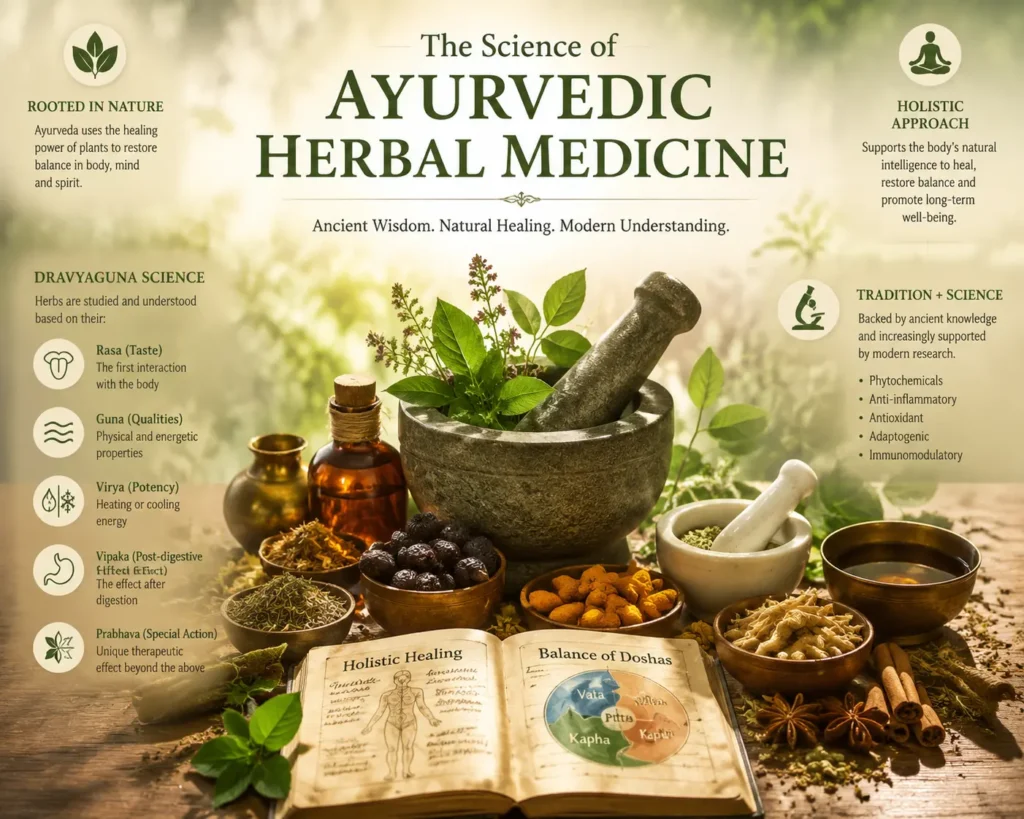
The traditional science of Ayurvedic pharmacology is known as Dravyaguna Vijnana, which studies the properties, actions, and therapeutic applications of herbs.
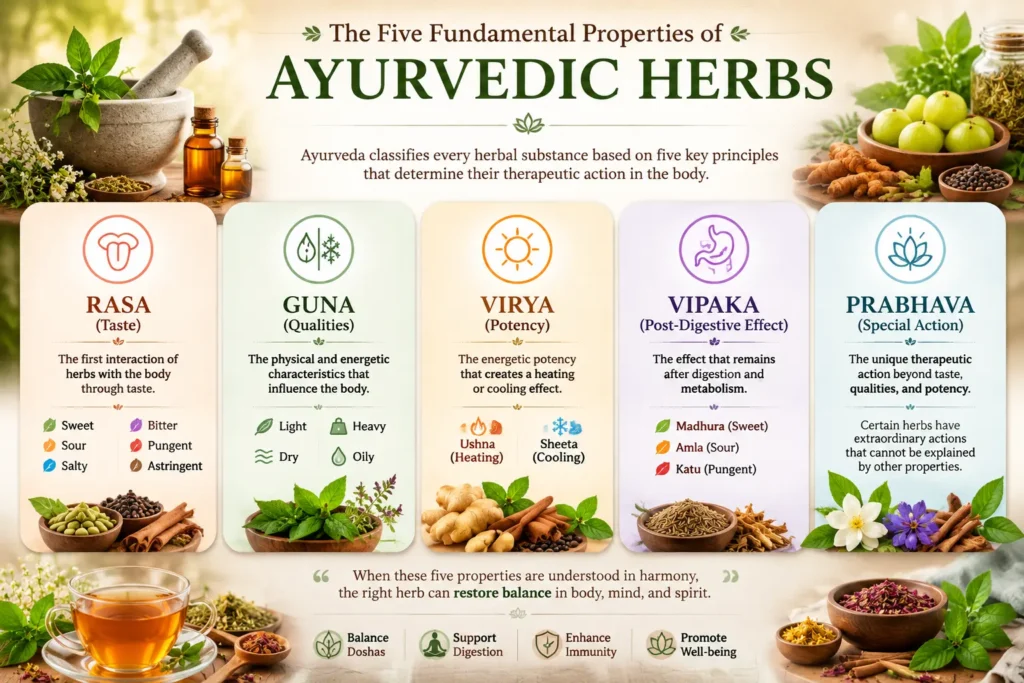
According to Ayurveda, every medicinal substance is evaluated through specific principles:
- Rasa (Taste)
- Guna (Qualities)
- Virya (Potency)
- Vipaka (Post-digestive effect)
- Prabhava (Unique therapeutic action)
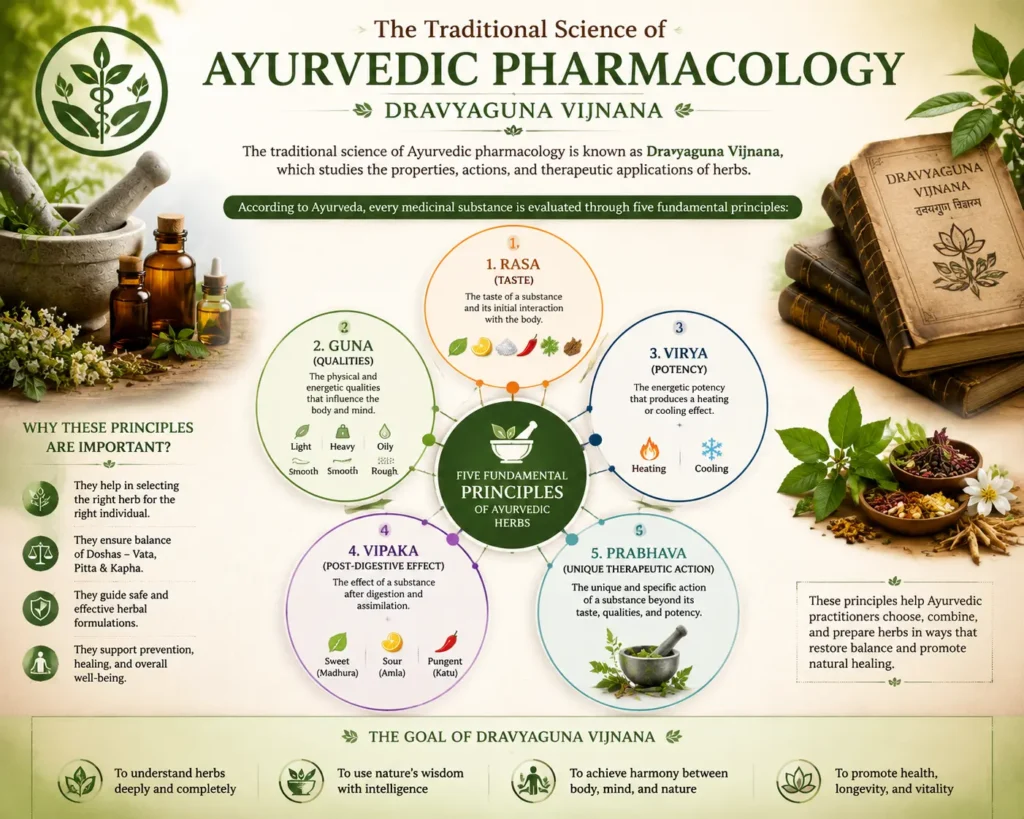
These principles help Ayurvedic practitioners select herbs according to the individual’s constitution and health condition.
The Five Fundamental Properties of Ayurvedic Herbs
1. Rasa: The Taste of Herbal Medicine
Ayurveda identifies six primary tastes:
- Sweet (Madhura)
- Sour (Amla)
- Salty (Lavana)
- Bitter (Tikta)
- Pungent (Katu)
- Astringent (Kashaya)
Each taste is believed to influence the doshas differently.
For example:
- Sweet taste traditionally supports Vata and Pitta balance.
- Bitter taste is traditionally associated with reducing excess Pitta and Kapha.
- Pungent taste is considered stimulating and warming.
2. Virya: The Potency of Herbs
Virya describes the energetic action of a substance.
The two primary categories are:
Ushna Virya (Heating Energy)
Heating herbs are traditionally used to:
- Stimulate digestion
- Increase metabolic activity
- Reduce cold and stagnant conditions
Examples include:
- Ginger
- Black pepper
- Long pepper
Sheeta Virya (Cooling Energy)
Cooling herbs are traditionally used to:
- Calm excessive heat
- Support soothing effects
- Balance inflammatory tendencies
Examples include:
- Sandalwood
- Coriander
- Amla
3. Vipaka: The Post-Digestive Effect
Vipaka refers to the final metabolic influence of food or herbs after digestion.
The three categories are:
| Vipaka | Traditional Effect |
|---|---|
| Madhura (Sweet) | Nourishing and building |
| Amla (Sour) | Supporting metabolic transformation |
| Katu (Pungent) | Drying and reducing qualities |
4. Prabhava: The Unique Action
Prabhava describes a unique therapeutic action that taste, potency, and post-digestive effects cannot fully explain.
Ayurveda recognizes that certain herbs have distinctive properties beyond general classification.
Harvesting and Selection of Ayurvedic Medicinal Plants
Traditional Ayurvedic pharmacy emphasizes careful harvesting methods to preserve the potency of medicinal plants.
Factors considered include:
- Season of collection
- Age of the plant
- Plant part used
- Geographic location
- Processing method
According to classical Ayurvedic principles:
- Roots are often collected when underground energy is considered concentrated.
- Leaves are collected during active growth periods.
- Flowers are collected when aromatic and therapeutic compounds are considered optimal.
- Seeds are selected after proper maturity.
Proper identification and ethical sourcing are essential because incorrect plant selection can affect safety and therapeutic quality.
Traditional Ayurvedic Herbal Preparation Methods
Raw herbs are rarely used without processing. Ayurveda describes several pharmaceutical methods known as Bhaishajya Kalpana.
Kalka: Herbal Paste Preparation
Kalka involves grinding fresh or dried plant materials into a paste.
Traditional purposes include:
- Extracting plant compounds
- Improving topical application
- Preparing medicated oils and formulations
Svarasa: Fresh Herbal Juice
Svarasa is prepared by extracting juice directly from fresh plant material.
It is traditionally valued because it preserves volatile components and natural plant properties.
Kwatha: Herbal Decoctions
Kwatha is one of the most common Ayurvedic preparations.
The process involves:
- Selecting herbs
- Crushing plant materials
- Boiling with water
- Reducing the liquid
- Filtering the final decoction
Traditional uses include:
- Digestive support
- Respiratory support
- Metabolic balance
Sneha Kalpana: Medicated Oils and Ghee
Sneha Kalpana is an advanced Ayurvedic pharmaceutical process that prepares herbal oils and medicated ghee.
The process combines:
- Herbal paste (kalka)
- Herbal decoction (kwatha)
- Lipid medium such as sesame oil or ghee
The final preparation is traditionally used because lipid-based compounds may carry herbal constituents into deeper tissues.
Common examples include:
- Brahmi Ghrita
- Triphala Ghrita
- Mahanarayan Oil
Specialized Panchakarma Supporting Therapies
Along with the main Panchakarma procedures, Ayurveda uses several supportive therapies.
Shirodhara
Shirodhara involves a continuous stream of warm herbal oil, milk, or other liquids poured over the forehead.
Traditional applications include:
- Stress management
- Relaxation
- Sleep support
- Mental calmness
Modern wellness practices often incorporate Shirodhara as a relaxation therapy.
Kati Basti
Kati Basti is a localized oil therapy in which practitioners place warm medicated oil over the lower back within a dough boundary.
Traditional applications include:
- Lower back discomfort
- Muscle stiffness
- Lumbar region support
Janu Basti
Janu Basti applies warm medicated oil around the knee joint.
Traditional purposes include:
- Supporting joint mobility
- Reducing stiffness
- Nourishing joint tissues
Akshitarpana
Akshitarpana is an Ayurvedic eye therapy using medicated ghee retained around the eyes.
Traditional applications include:
- Eye relaxation
- Dryness support
- Reducing eye fatigue
Potential Health Benefits of Panchakarma and Herbal Medicine
Ayurveda traditionally considers Panchakarma a comprehensive approach that supports physical, mental, and emotional balance.
Potential benefits reported in Ayurvedic practice include:
1. Improved Digestive Function
Ayurveda considers digestion (agni) central to health.
Panchakarma may support:
- Better appetite regulation
- Improved digestion patterns
- Healthier elimination
2. Support for Stress Reduction
Therapies such as:
- Abhyanga
- Shirodhara
- Meditation
- Breathing practices
are commonly used to promote relaxation.
Research into Ayurvedic practices suggests that some therapies may influence stress-related physiological pathways, although more rigorous clinical studies are needed.
3. Support for Inflammatory Balance
Certain Ayurvedic herbs contain bioactive compounds that have been studied for antioxidant and anti-inflammatory properties.
Examples include:
- Turmeric (Curcuma longa)
- Ashwagandha (Withania somnifera)
- Guduchi (Tinospora cordifolia)
Ayurvedic practitioners should individualize herbal use because safety, dosage, and interactions vary
4. Rejuvenation and Healthy Aging
Rasayana therapy focuses on maintaining vitality and supporting healthy aging.
Traditional goals include:
- Tissue nourishment
- Strength improvement
- Mental clarity
- Long-term wellness
Safety Considerations Before Panchakarma
Panchakarma should not be approached as a generalized detox program for everyone.
A qualified Ayurvedic practitioner should evaluate:
- Age
- Health status
- Digestive strength
- Current medications
- Pregnancy status
- Chronic diseases
- Individual constitution
Certain procedures may not be suitable for:
- Pregnant individuals
- People with severe weakness
- Acute illnesses
- Certain medical conditions
Herbal medicines can also interact with pharmaceutical medications. Professional guidance is recommended, especially for therapeutic use.
Frequently Asked Questions About Panchakarma and Ayurvedic Herbal Medicine
What is Panchakarma in Ayurveda?
In Ayurveda, Panchakarma represents a classical purification system that includes five therapeutic procedures to remove accumulated imbalances, restore dosha harmony, and support overall wellbeing.
Is Panchakarma only a detox treatment?
No. Traditional Panchakarma is more comprehensive than detoxification. It includes preparation, cleansing, recovery, diet management, herbal therapy, and lifestyle correction.
How long does Panchakarma treatment take?
The duration varies depending on individual assessment. Traditional programs may range from several days to several weeks depending on preparation, cleansing procedures, and recovery requirements.
Can everyone undergo Panchakarma?
No. Panchakarma requires individual evaluation. Suitability depends on health condition, age, strength, and specific therapeutic goals.
What herbs are commonly used in Ayurveda?
Common Ayurvedic herbs include:
- Ashwagandha
- Turmeric
- Triphala
- Guduchi
- Brahmi
- Shatavari
- Amla
The appropriate herb depends on individual needs and should be selected carefully.
Conclusion: Panchakarma as a Traditional System of Healing
Panchakarma represents one of Ayurveda’s most sophisticated therapeutic systems, combining purification, herbal medicine, diet, lifestyle modification, and rejuvenation practices.
Its foundation lies in the Ayurvedic understanding that health depends on maintaining harmony between digestion, metabolism, tissues, and physiological energies.
Through its three-stage process—Purvakarma preparation, Pradhankarma cleansing, and Paschatkarma rejuvenation—Panchakarma provides a structured approach to restoring balance.
Ultimately, Panchakarma and Ayurvedic herbal medicine can provide valuable insights into preventive healthcare, personalized wellness, and traditional health practices when practitioners apply them responsibly under qualified guidance.