Abhyanga Massage vs Regular Massage: Complete Ayurvedic Healing Comparison Guide
Introduction: Abhyanga Massage vs Regular Massage
The comparison between Abhyanga massage vs regular massage is becoming increasingly important as people shift toward natural healing systems. Massage therapy is widely used for stress relief, pain management, and relaxation, but not all massage types work in the same way.
Abhyanga massage comes from Ayurveda and focuses on holistic healing, while regular massage is mainly designed for physical relaxation and muscle recovery.
Understanding abhyanga massage vs regular massage helps individuals choose the right therapy based on their health goals.
1. What is Regular Massage?
Regular massage refers to modern therapeutic massage techniques practiced in spas, physiotherapy centers, and wellness clinics.
Common types include:
- Swedish massage
- Deep tissue massage
- Sports massage
- Thai massage
Key Purpose of Regular Massage:
- Muscle relaxation
- Pain relief
- Improved flexibility
- Short-term stress reduction
Regular massage benefits mainly the physical body and soft tissues.
2. Historical and Cultural Significance of Abhyanga
Abhyanga is an ancient Ayurvedic practice that has been used in India for over 5,000 years.
It is part of Dinacharya (daily routine in Ayurveda) and is considered essential for maintaining health and longevity.
In Ayurveda, Abhyanga is not just therapy—it is preventive medicine.
Historically:
- Used by kings and warriors for strength
- Practiced daily for longevity
- Considered essential for dosha balance
This makes abhyanga massage vs regular massage a comparison between traditional medicine and modern wellness therapy.
3. Key Techniques Used in Abhyanga Massage
Abhyanga massage follows specific Ayurvedic techniques:
Techniques include:
- Warm herbal oil application
- Circular motion on joints
- Long strokes on limbs
- Pressure-based rhythmic massage
- Energy channel stimulation (nadis)
Oils used:
- Sesame oil (most common)
- Coconut oil
- Herbal medicated oils
These techniques enhance abhyanga massage benefits significantly compared to regular massage.
4. Benefits of Abhyanga Massage
Abhyanga massage benefits are deep, long-term, and holistic.
Physical benefits:
- Improves blood circulation
- Enhances lymphatic drainage
- Reduces muscle stiffness
Mental benefits:
- Reduces stress and anxiety
- Improves sleep quality
- Calms the nervous system
Ayurvedic benefits:
- Balances Vata, Pitta, Kapha
- Removes toxins (Ama)
- Improves energy flow
These abhyanga massage benefits make it a complete healing therapy.
5. Benefits of Regular Massage
Regular massage benefits are mainly physical and short-term.
Key benefits:
- Muscle relaxation
- Pain reduction
- Improved flexibility
- Temporary stress relief
Regular massage is effective for athletes and physical recovery but does not focus on internal detox or energy balancing.
6. Differences in Oils and Ingredients Used
One major difference in abhyanga massage vs regular massage is oil usage.
Abhyanga Massage:
- Herbal medicated oils
- Natural Ayurvedic ingredients
- Tailored to dosha type
Regular Massage:
- Mineral oils
- Synthetic oils
- Aromatherapy oils (optional)
Ayurvedic oils provide medicinal effects, increasing ayurvedic massage benefits.
7. Ideal Candidates for Each Type of Massage
Abhyanga Massage is ideal for:
- Chronic stress
- Anxiety
- Sleep disorders
- Fatigue
- Detox seekers
Regular Massage is ideal for:
- Athletes
- Gym recovery
- Muscle injuries
- Physical stiffness
This distinction is important in choosing between abhyanga massage vs regular massage.
8. How to Choose Between Abhyanga and Regular Massage
Choosing the right massage depends on health goals:
Choose Abhyanga if:
- You want deep healing
- You prefer natural detox
- You want long-term wellness
Choose Regular Massage if:
- You need quick muscle relief
- You are recovering from physical strain
- You want short-term relaxation
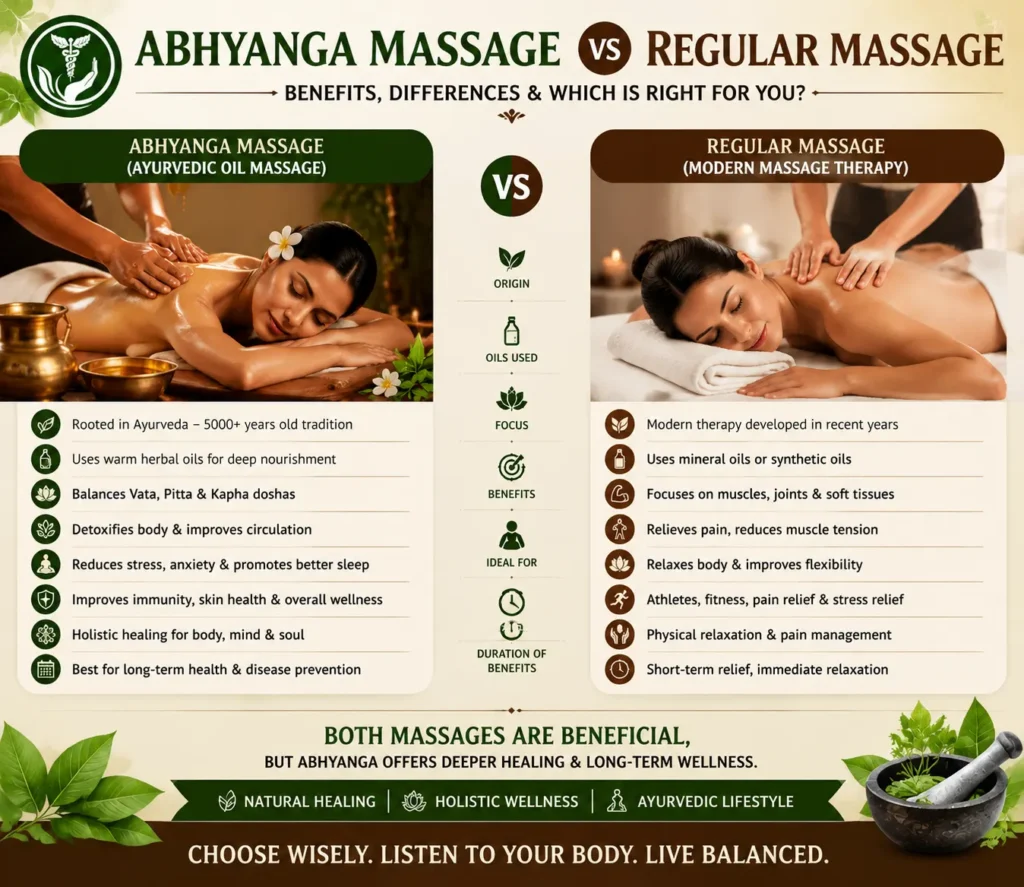
9. Abhyanga Massage vs Regular Massage (Core Comparison)
| Feature | Abhyanga Massage | Regular Massage |
|---|---|---|
| Origin | Ayurveda | Modern therapy |
| Focus | Holistic healing | Muscle relaxation |
| Oils | Herbal medicated oils | Mineral oils |
| Benefits | Long-term healing | Short-term relief |
| Target | Body + mind + energy | Physical body |
10. Abhyanga Massage vs Regular Massage for Stress Relief
Stress management is one of the most important reasons people search for massage therapy.
Abhyanga:
- Works on nervous system
- Reduces cortisol levels
- Provides long-term calmness
Regular Massage:
- Temporary relaxation
- Muscle-based stress relief
11. Abhyanga Massage vs Regular Massage for Pain Relief
Regular Massage:
- Best for muscle pain
- Immediate relief
Abhyanga Massage:
- Works slowly but deeply
- Reduces chronic pain
- Improves body balance
12. Ayurvedic Perspective on Abhyanga Massage
In Ayurveda, Abhyanga is considered essential daily therapy.
It is believed to:
- Prevent disease
- Strengthen immunity
- Increase longevity
This is why ayurvedic massage benefits are highly valued in traditional medicine.
13. Frequency of Abhyanga Massage
Recommended frequency:
- Daily (ideal)
- At least 3–4 times weekly
Regular practice enhances abhyanga massage benefits significantly.
14. Safety and Precautions
- Avoid during fever
- Avoid immediately after meals
- Consult professionals for chronic conditions
15. Conclusion: Which Massage is Right for You?
The comparison of abhyanga massage vs regular massage shows that both therapies have different purposes.
Regular massage is effective for physical relaxation and short-term relief, while Abhyanga massage offers deeper healing, detoxification, and long-term wellness.
If your goal is complete health balance, Abhyanga is the more comprehensive choice.