Giripradakshina: The Sacred Origins, Spiritual Significance, and Complete Guide to Tiruvannamalai Girivalam
Meta Description:
Discover the history, spiritual meaning, benefits, temples, Ashta Lingams, and free AC bus services of Giripradakshina, also known as Girivalam, around Arunachala Hill in Tiruvannamalai.
What Is Giripradakshina?
Tiruvannamalai Giripradakshina, popularly known as Girivalam, is one of the most sacred spiritual practices in India. The tradition involves walking around the holy Arunachala Hill with devotion, prayer, and mindfulness.
The words “Giripradakshina” come from Sanskrit:
- “Giri” means hill or mountain
- “Pradakshina” means circumambulation or walking around something sacred
In Tamil Nadu, the same sacred practice is widely called Girivalam. Both Giripradakshina and Girivalam have the same meaning and refer to the spiritual act of walking around Arunachala Hill.
For centuries, devotees, saints, yogis, and spiritual seekers have believed that Giripradakshina brings peace, removes negative karma, calms the mind, and strengthens spiritual awareness.
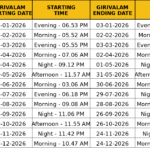
Girivalam Calendar – 2026 with Pournami calander for 2025, starting and ending time and dates

Why Arunachala Hill Is Considered Sacred
According to Hindu mythology, Arunachala Hill is not simply a mountain. Devotees believe the hill itself is a manifestation of Lord Shiva in the form of divine fire.
Arunachala is associated with the Agni Lingam among the Pancha Bhoota Shiva temples, representing the fire element. Ancient spiritual texts describe Arunachala as one of the most powerful spiritual centers in India.
Many saints and sages believed that Arunachala possesses unique spiritual energy. Even today, pilgrims from around the world visit Tiruvannamalai seeking devotion, healing, meditation, and inner transformation.
How Did Girivalam Start?
The origins of Girivalam are deeply connected to Lord Shiva and ancient Hindu legends.
One well-known story describes a disagreement between Brahma and Vishnu about supremacy. To reveal the truth, Lord Shiva appeared as an endless column of fire stretching infinitely upward and downward.
Shiva challenged Brahma and Vishnu to find the beginning and end of the divine flame. Vishnu traveled downward while Brahma flew upward, but neither could discover its limits.
That infinite pillar of fire later cooled into Arunachala Hill. Since the hill itself represents Shiva, devotees began circumambulating it as an act of worship and surrender. This sacred tradition eventually became known as Giripradakshina or Girivalam.
Over generations, saints encouraged devotees to walk around Arunachala with humility and devotion, believing the practice could reduce ego and purify the soul.
The Spiritual Significance of Giripradakshina
For devotees, Giripradakshina is not merely a physical journey. It is a spiritual path that combines devotion, meditation, discipline, and self-reflection.
Symbol of Devotion and Surrender
Walking around Arunachala represents surrendering the ego before the divine. Devotees believe this practice helps cultivate humility and spiritual awareness.
Meditation Through Walking
Many pilgrims perform Girivalam silently while chanting mantras such as “Om Namah Shivaya.” The repetitive rhythm of walking creates a peaceful meditative state.
Spiritual Cleansing
Some devotees believe Giripradakshina helps cleanse negative karma, emotional stress, and mental burdens.
Connection With Nature and Divine Energy
The sacred walk takes place under the open sky around the holy hill. Many people describe feeling calm, grounded, and spiritually uplifted during the journey.
The 14-Kilometer Girivalam Path
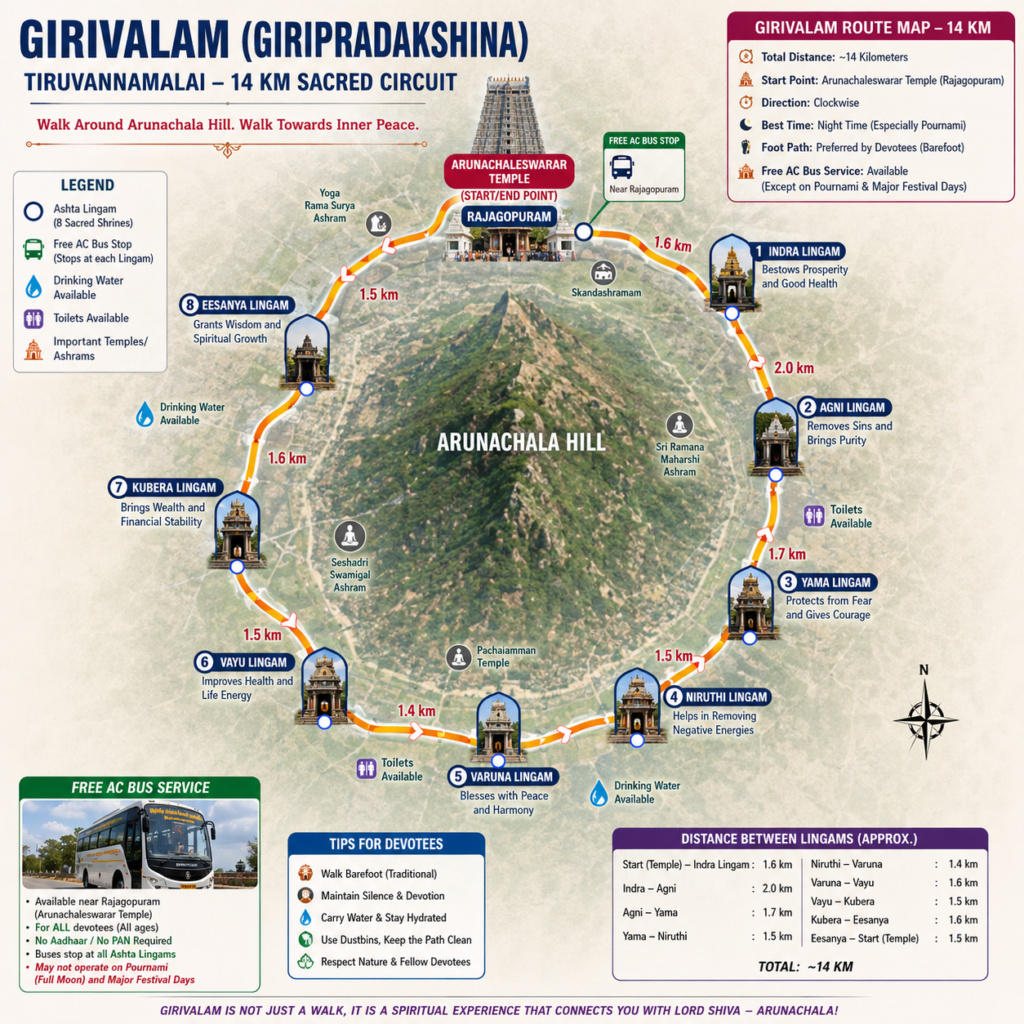
The Girivalam route around Arunachala Hill is approximately 14 kilometers long.
Thousands of pilgrims complete this sacred walk every month, especially during:
- Full moon nights
- Karthigai Deepam
- Maha Shivaratri
- Important Shiva festivals
The route passes through temples, shrines, sacred trees, meditation spaces, and the famous Ashta Lingams.
Many devotees walk barefoot as a symbol of devotion and humility.
Arunachaleswarar Temple and Girivalam
Arunachaleswarar Temple The Arunachaleswarar Temple is one of the most important Shiva temples in India and serves as the spiritual center of Tiruvannamalai.
Most pilgrims begin their Giripradakshina journey at the temple before proceeding around Arunachala Hill.
The temple is famous for:
- Massive Rajagopurams
- Ancient Dravidian architecture
- Sacred Shiva shrines
- Deep spiritual atmosphere
- Historic religious traditions
Devotees often offer prayers at the temple before starting Girivalam.
The Sacred Ashta Lingams
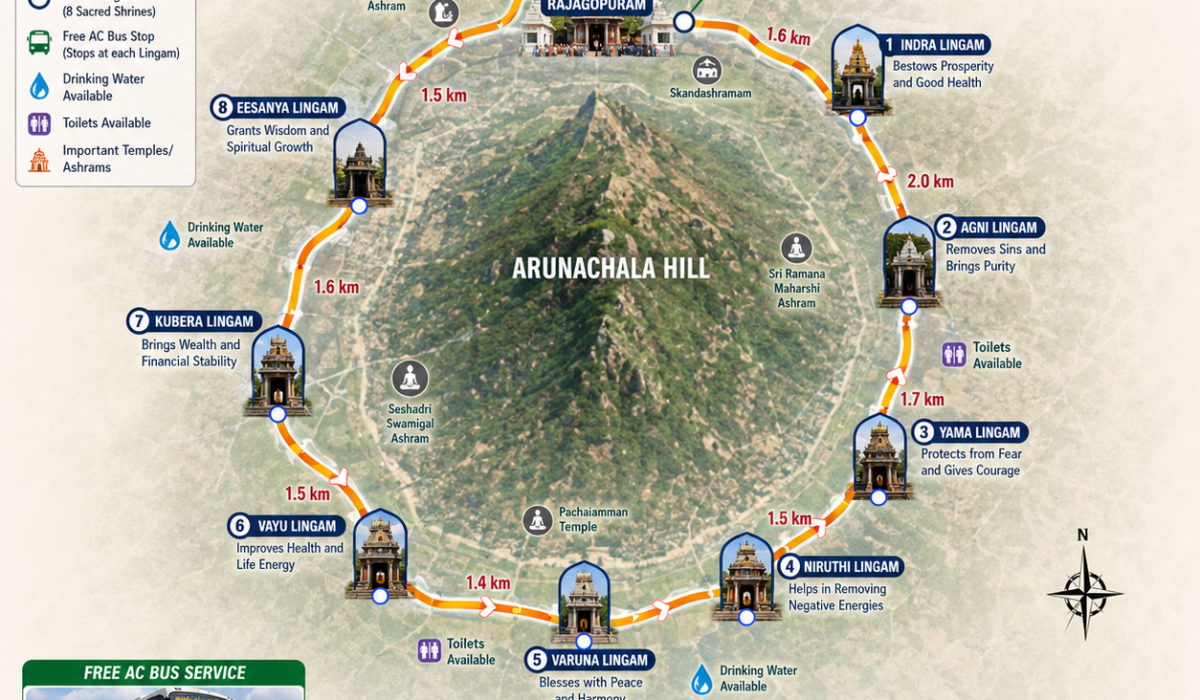
One of the most important aspects of Giripradakshina is visiting the Ashta Lingams located around Arunachala Hill.
The eight Lingams represent the eight directions and hold deep spiritual importance.
The Ashta Lingams are:
- Indra Lingam
- Agni Lingam
- Yama Lingam
- Niruthi Lingam
- Varuna Lingam
- Vayu Lingam
- Kubera Lingam
- Eesanya Lingam
Pilgrims stop at each Lingam to pray, meditate, and seek blessings.
Many devotees believe visiting all eight Lingams during Girivalam enhances the spiritual benefits of the journey.
Full Moon Girivalam (Pournami Girivalam)
Full moon Full moon Girivalam, also known as Pournami Girivalam, is considered especially sacred.
According to spiritual beliefs, the energy of the full moon positively influences the body and mind. Devotees believe performing Giripradakshina during Pournami increases spiritual vibrations and blessings.
During full moon nights:
- Lakhs of devotees gather in Tiruvannamalai
- Temples remain highly active
- Spiritual chanting fills the streets
- The Girivalam path becomes deeply devotional
Many pilgrims consider Pournami Girivalam a powerful spiritual experience.
Karthigai Deepam and Arunachala
Karthigai Deepam Karthigai Deepam is one of the grandest festivals celebrated in Tiruvannamalai.
During this festival:
- A massive sacred flame is lit on top of Arunachala Hill
- Special temple rituals are conducted
- Lakhs of devotees visit the town
- Giripradakshina becomes highly significant
The giant flame symbolizes the original infinite fire form of Lord Shiva.
For many devotees, participating in Girivalam during Karthigai Deepam is a deeply emotional and spiritual event.
Ramana Maharshi and Arunachala
Ramana Maharshi Ramana Maharshi is one of the most respected spiritual masters associated with Arunachala.
He regarded Arunachala Hill itself as a living form of the divine and encouraged devotees to perform Giripradakshina with silence and awareness.
According to Ramana Maharshi:
- Arunachala possesses immense spiritual power
- Girivalam calms the mind
- Silence leads to self-realization
- Walking around the hill is a sacred meditation
Even today, many spiritual seekers visit Tiruvannamalai because of his teachings.
Benefits of Giripradakshina
People undertake Girivalam for spiritual, emotional, and personal reasons.
Spiritual Benefits
Many devotees believe Giripradakshina:
- Removes negative karma
- Increases devotion
- Brings inner peace
- Supports meditation
- Reduces ego
- Strengthens spiritual discipline
Mental and Emotional Benefits
Walking in a sacred and peaceful environment may help:
- Reduce stress
- Calm anxiety
- Improve emotional balance
- Increase mindfulness
Physical Benefits
Completing the 14-kilometer Girivalam route also involves physical activity that may:
- Improve endurance
- Support circulation
- Encourage healthy movement
Many devotees report feeling mentally lighter and emotionally refreshed after the journey.
Free AC Bus Service for Giripradakshina Around Arunachala Hill
Tiruvannamalai Temple Administration To make Giripradakshina accessible for everyone, the Tiruvannamalai temple management provides free AC bus services around the 14-kilometer Girivalam route.
These buses help devotees experience the sacred atmosphere of Arunachala even if they cannot complete the full walk on foot.
The service is especially useful for:
- Elderly devotees
- Families with children
- Visitors with physical difficulties
- Pilgrims needing rest during the journey
However, the buses are open to all devotees, not just senior citizens.

Where Are the Free Girivalam Buses Available?
The free AC buses are usually available near the Rajagopuram entrance of the Arunachaleswarar Temple.
Pilgrims can board the buses directly without complicated formalities.
No Aadhaar or PAN Card Required
One of the most convenient aspects of the service is its accessibility.
Devotees generally do not need:
- Aadhaar card
- PAN card
- Special registration
- Age verification
The buses are intended to make the sacred Girivalam experience available to everyone.
Bus Stops Near the Ashta Lingams
The free Girivalam buses travel around Arunachala Hill and stop near the important Ashta Lingams so devotees can visit each sacred shrine during the journey.
The bus route commonly includes access to:
- Indra Lingam
- Agni Lingam
- Yama Lingam
- Niruthi Lingam
- Varuna Lingam
- Vayu Lingam
- Kubera Lingam
- Eesanya Lingam
This allows pilgrims to experience the spiritual significance of all eight Lingams even if they are unable to walk the full 14 kilometers.
Important Note About Pournami and Festival Days
During extremely crowded occasions such as:
- Full Moon (Pournami) Girivalam
- Karthigai Deepam
- Maha Shivaratri
- Major temple festivals
the free AC bus services may be limited, delayed, or temporarily unavailable because of crowd control and traffic restrictions.
On full moon nights especially, lakhs of devotees participate in Girivalam, making vehicle movement difficult around Arunachala Hill.
Visitors are advised to:
- Arrive early
- Check local announcements
- Carry water and essentials
- Prepare for heavy crowds
Rules and Traditions Followed During Girivalam
Although practices may vary, several traditions are commonly followed during Giripradakshina.
Walking Barefoot
Many devotees walk barefoot as a sign of humility and devotion.
Clockwise Circumambulation
Girivalam is traditionally performed clockwise around Arunachala Hill.
Maintaining Silence and Positive Thoughts
Some devotees prefer silence or continuous chanting during the journey to maintain spiritual focus.
Best Time to Perform Giripradakshina
Girivalam can be performed throughout the year, but certain times are considered especially sacred.
Popular times include:
- Full moon nights
- Karthigai Deepam
- Maha Shivaratri
- Early morning hours
Cooler weather conditions are generally more comfortable for walking.
Many devotees prefer nighttime Girivalam because the atmosphere feels more peaceful and spiritually intense.
The Experience of Walking Around Arunachala
Every devotee experiences Giripradakshina differently.
Some describe feeling:
- Emotional peace
- Spiritual energy
- Mental clarity
- Deep devotion
- Inner silence
Walking under the moonlight beside Arunachala Hill while surrounded by prayers and chanting creates a spiritual atmosphere unlike anywhere else.
For many people, Girivalam becomes more than a religious ritual — it becomes a deeply personal spiritual journey.
Why Giripradakshina Continues to Inspire Millions
In today’s fast-paced world, Girivalam continues to attract millions because it offers:
- Simplicity
- Devotion
- Reflection
- Spiritual connection
- Inner calmness
The sacred tradition combines physical movement, meditation, prayer, mythology, and community devotion into one powerful spiritual experience.
Whether performed for faith, healing, meditation, or personal growth, Giripradakshina remains one of India’s most meaningful and timeless spiritual practices.
Final Thoughts
Arunachala Hill Giripradakshina, also known as Girivalam, is far more than a walk around a sacred hill. It is a journey of devotion, surrender, meditation, and inner transformation rooted in centuries of spiritual tradition.
From the legendary origins of Lord Shiva’s infinite fire form to the peaceful experience of walking around Arunachala under the full moon, Girivalam continues to inspire devotees from around the world.
The addition of free AC bus services around the Girivalam route further reflects the inclusive spiritual culture of Tiruvannamalai, allowing devotees of all ages and physical abilities to participate in the sacred experience and visit the Ashta Lingams around the holy hill.
For many pilgrims, Giripradakshina is not simply a physical journey around Arunachala — it is a spiritual journey toward peace, devotion, and self-discovery.