Ayurvedic Eye Care: A Complete Guide to Protecting and Nourishing Your Vision Naturally
Introduction about Ayurvedic Eye Care.
Our eyes are among the most precious gifts we possess. They allow us to experience the beauty of nature, connect with loved ones, perform daily tasks, and navigate the world around us. Yet in today’s digital age, eye health is under constant pressure. Hours spent in front of computers, smartphones, and tablets, combined with stress, poor sleep, environmental pollution, and unhealthy dietary habits, have contributed to a growing number of eye-related concerns.
Many people experience symptoms such as eye strain, dryness, redness, blurred vision, headaches, burning sensations, and fatigue. While modern medicine offers valuable solutions for diagnosing and managing eye conditions, Ayurveda provides a complementary and holistic perspective focused on prevention, balance, and overall well-being.
Ayurveda, India’s ancient system of natural healing, has recognized the importance of eye health for thousands of years. Classical Ayurvedic texts describe the eyes as one of the most vital sensory organs and emphasize the role of proper nutrition, lifestyle habits, herbal support, detoxification, and specialized therapies in preserving vision.
At Dhanwantari Ayurveda Detox Center in Tiruvannamalai, Ayurvedic wellness programs focus on restoring balance within the body and mind, helping individuals adopt healthier habits that may support eye comfort, reduce stress, and promote overall vitality.
In this comprehensive guide, we will explore the Ayurvedic understanding of eye health, common eye concerns, beneficial herbs, dietary recommendations, daily eye care routines, yogic practices, and traditional Ayurvedic therapies that may help support healthy vision naturally.
Understanding Eye Health in Ayurveda
The Importance of Vision in Ayurvedic Medicine
Ayurveda considers vision one of the most valuable human senses. The eyes are viewed as a direct reflection of internal health and vitality.
According to Ayurvedic philosophy, healthy eyesight depends upon:
- Balanced doshas
- Proper digestion and metabolism
- Strong tissue nourishment
- Healthy circulation
- Mental calmness
- Adequate rest and rejuvenation
Rather than focusing solely on the eyes themselves, Ayurveda views eye health as a reflection of whole-body wellness.
Alochaka Pitta: The Ayurvedic Principle of Vision
Among the various subtypes of Pitta Dosha, Alochaka Pitta is specifically associated with visual perception.
Alochaka Pitta governs:
- Visual processing
- Light perception
- Color recognition
- Clarity of sight
When Alochaka Pitta functions optimally, vision remains clear and comfortable. However, excessive heat, stress, poor diet, and lifestyle imbalances may aggravate Pitta and contribute to eye discomfort.
The Role of Doshas in Eye Health
Vata and the Eyes
Vata governs movement and nervous system function.
When Vata becomes aggravated, symptoms may include:
- Dry eyes
- Eye twitching
- Visual fatigue
- Sensitivity to wind
- Difficulty focusing
Pitta and the Eyes
Pitta is closely associated with vision.
Excess Pitta may contribute to:
- Burning sensations
- Redness
- Light sensitivity
- Irritation
- Inflammatory conditions
Kapha and the Eyes
Kapha provides structure, lubrication, and stability.
Excess Kapha may lead to:
- Heaviness in the eyes
- Excessive tearing
- Mucus formation
- Puffiness
Maintaining doshic balance is one of Ayurveda’s primary goals for supporting healthy vision.
Common Eye Problems According to Ayurveda
Digital Eye Strain
Digital eye strain has become one of the most common modern complaints.
Symptoms often include:
- Tired eyes
- Blurred vision
- Headaches
- Dryness
- Neck tension
Ayurveda associates this condition primarily with Vata aggravation due to excessive visual stimulation and mental overactivity.
Dry Eyes
Dry eyes may result from:
- Long hours of screen exposure
- Aging
- Air-conditioned environments
- Inadequate hydration
Ayurveda often links dry eyes to increased Vata Dosha.
Burning and Redness
Burning sensations and redness frequently indicate elevated Pitta.
Common triggers include:
- Excess heat
- Spicy foods
- Stress
- Lack of sleep
- Excessive screen use
Excessive Watering
While dryness may occur in some individuals, others experience excessive tearing.
This may be associated with Kapha imbalance and poor drainage.
Age-Related Vision Changes
As we age, natural changes occur within the eyes.
Ayurveda emphasizes prevention through:
- Proper nutrition
- Rasayana therapies
- Lifestyle management
- Stress reduction
Causes of Eye Health Deterioration
Excessive Screen Exposure
Modern lifestyles require prolonged use of digital devices.
Common consequences include:
- Reduced blinking
- Eye muscle fatigue
- Dryness
- Increased visual stress
The average blink rate drops significantly when using screens, reducing natural lubrication.
Poor Nutrition
The eyes require adequate nutrients for optimal function.
Nutritional deficiencies may impact:
- Visual clarity
- Eye comfort
- Tissue health
A diet lacking fresh fruits, vegetables, and healthy fats may contribute to ocular discomfort.
Inadequate Sleep
Sleep is essential for eye restoration.
Poor sleep may cause:
- Puffy eyes
- Dryness
- Fatigue
- Reduced visual comfort
Ayurveda considers sleep one of the three pillars of health.
Chronic Stress
Stress affects both the mind and body.
Long-term stress may increase:
- Eye strain
- Headaches
- Visual fatigue
- Nervous tension
Environmental Factors
Environmental stressors include:
- Pollution
- Dust
- Air conditioning
- Excessive sunlight
Protecting the eyes from environmental challenges is an important aspect of Ayurvedic eye care.
Ayurvedic Diet for Healthy Eyes
Nutrition plays a fundamental role in maintaining eye health.
Foods That Support Eye Wellness
Amla (Indian Gooseberry)
Amla is highly valued in Ayurveda.
Benefits include:
- Rich antioxidant content
- Cooling properties
- Support for tissue nourishment
Carrots
Carrots provide nutrients that support healthy vision and overall eye function.
Leafy Greens
Dark leafy vegetables contribute important vitamins and antioxidants.
Examples include:
- Spinach
- Moringa leaves
- Kale
- Fenugreek greens
Soaked Almonds
Almonds are traditionally recommended for supporting brain and eye health.
Cow’s Ghee
Ayurveda considers properly sourced ghee beneficial when consumed in moderation.
Ghee may help:
- Support tissue nourishment
- Balance Vata and Pitta
- Promote lubrication
Foods to Limit
Certain foods may aggravate doshas and contribute to eye discomfort.
These include:
- Excessively spicy foods
- Deep-fried foods
- Highly processed foods
- Excess sugar
- Excess caffeine
Reducing these foods may help maintain balance.
Hydration and Eye Health
Adequate hydration supports natural eye lubrication.
Recommendations include:
- Drinking sufficient water
- Consuming fresh fruits
- Herbal infusions
- Coconut water during hot weather
Proper hydration helps maintain overall wellness and eye comfort.
Daily Ayurvedic Eye Care Routine (Dinacharya)
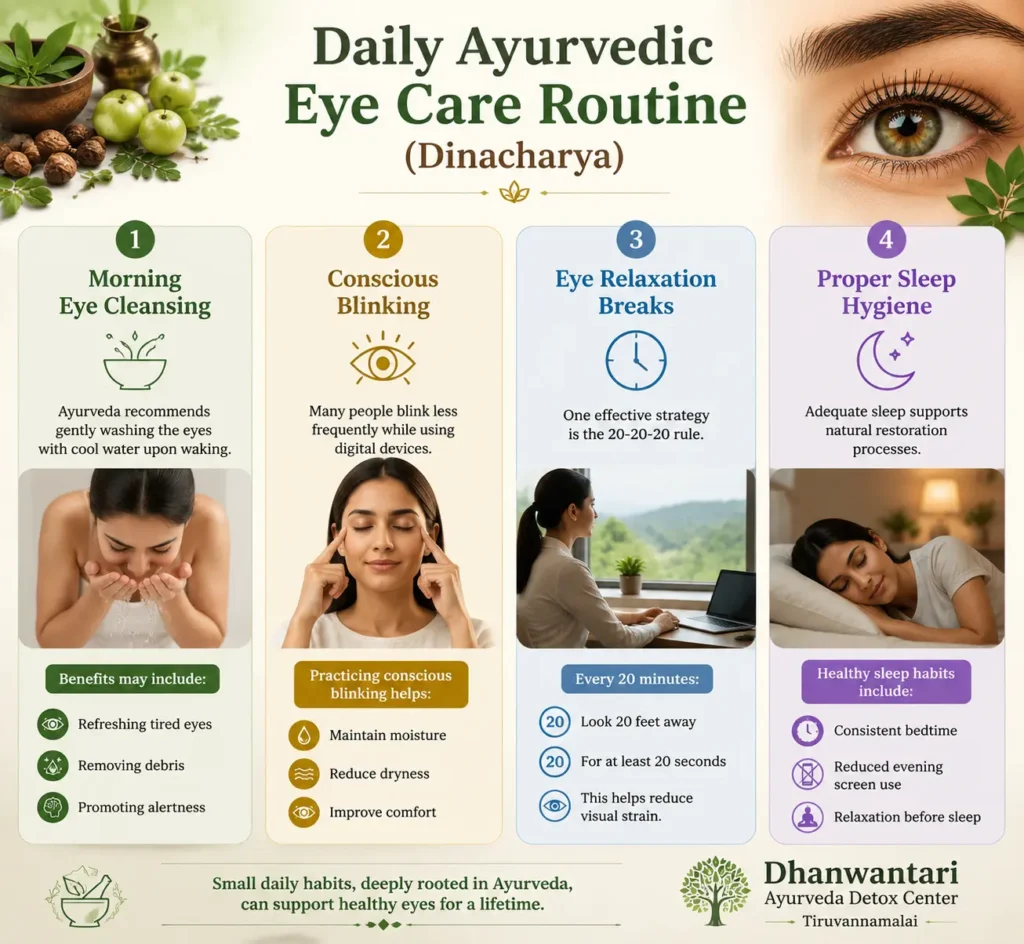
Morning Eye Cleansing
Ayurveda recommends gently washing the eyes with cool water upon waking.
Benefits may include:
- Refreshing tired eyes
- Removing debris
- Promoting alertness
Conscious Blinking
Many people blink less frequently while using digital devices.
Practicing conscious blinking helps:
- Maintain moisture
- Reduce dryness
- Improve comfort
Eye Relaxation Breaks
One effective strategy is the 20-20-20 rule.
Every 20 minutes:
- Look 20 feet away
- For at least 20 seconds
This helps reduce visual strain.
Proper Sleep Hygiene
Healthy sleep habits include:
- Consistent bedtime
- Reduced evening screen use
- Relaxation before sleep
Adequate sleep supports natural restoration processes.
Ayurvedic Herbs for Eye Health
Triphala
Triphala is one of Ayurveda’s most respected herbal formulations.
It contains:
- Amla
- Haritaki
- Bibhitaki
Traditionally, Triphala is used to support:
- Digestive health
- Detoxification
- Eye wellness
Brahmi
Brahmi supports:
- Mental clarity
- Stress reduction
- Nervous system balance
Reduced stress may indirectly benefit eye comfort.
Guduchi
Guduchi is valued for its rejuvenating properties.
It is often used to support:
- Immunity
- Cellular health
- Overall vitality
Yashtimadhu (Licorice)
Known for its cooling qualities, Yashtimadhu is traditionally used to help balance Pitta.
Shatavari
Shatavari is considered nourishing and cooling.
It may help support:
- Tissue hydration
- Pitta balance
- General wellness
Ayurvedic Eye Exercises
Palming
Palming is a simple relaxation exercise.
How to Practice
- Rub your palms together.
- Close your eyes.
- Gently cup your palms over the eyes.
- Relax for several minutes.
Benefits may include:
- Reduced eye fatigue
- Relaxation
- Mental calmness
Eye Rotation Exercises
Move the eyes slowly:
- Up and down
- Left and right
- Circular motions
These exercises may help improve eye muscle flexibility.
Focus Shifting
Practice alternating focus between:
- A nearby object
- A distant object
This may help reduce digital eye strain.
Trataka: Yogic Gazing Practice
Trataka is a traditional yogic technique involving focused gazing.
Commonly performed using:
- A candle flame
- A small object
Potential benefits include:
- Improved concentration
- Mental calmness
- Reduced distractions
Trataka should be practiced carefully and avoided if eye irritation is present.
Pranayama for Eye Health
Nadi Shodhana
Alternate nostril breathing helps calm the nervous system.
Benefits may include:
- Reduced stress
- Improved mental clarity
- Enhanced relaxation
Bhramari Pranayama
The humming bee breath promotes:
- Calmness
- Relaxation
- Emotional balance
Sheetali Pranayama
This cooling breath may help balance excess Pitta and reduce heat-related discomfort.
Traditional Ayurvedic Eye Therapies
At specialized Ayurvedic wellness centers such as Dhanwantari Ayurveda Detox Center in Tiruvannamalai, traditional therapies may be incorporated as part of individualized wellness programs.

Netra Tarpana
Netra Tarpana is one of Ayurveda’s most well-known eye therapies.
Procedure Overview
A medicated ghee reservoir is created around the eyes, allowing therapeutic oils or ghee to remain in contact with the eye area for a specific duration.
Traditional goals include:
- Nourishing eye tissues
- Supporting relaxation
- Reducing dryness
Netra Dhara
Netra Dhara involves the gentle pouring of herbal liquids over the eye region.
It is traditionally used for:
- Cooling
- Relaxation
- Eye comfort
Shirodhara
Shirodhara involves a continuous stream of warm herbal oil poured over the forehead.
Potential benefits include:
- Stress reduction
- Deep relaxation
- Improved sleep quality
Since stress contributes significantly to eye strain, Shirodhara may indirectly support eye wellness.
Nasya Therapy
Nasya involves administering herbal oils through the nasal passages.
Ayurveda considers Nasya beneficial for:
- Head region nourishment
- Sensory organ support
- Mental clarity
Eye Care Tips for Digital Professionals
Millions of professionals spend eight or more hours daily in front of screens.
Optimize Your Workspace
Maintain:
- Proper screen height
- Comfortable viewing distance
- Adequate lighting
Reduce Glare
Avoid excessive reflections and bright light exposure.
Take Frequent Breaks
Schedule regular pauses throughout the day.
Practice Evening Eye Recovery
After work:
- Limit screen exposure
- Spend time outdoors
- Practice relaxation exercises
Seasonal Ayurvedic Eye Care
Summer
Summer often aggravates Pitta.
Recommendations:
- Stay hydrated
- Consume cooling foods
- Protect eyes from intense sunlight
Winter
Winter may increase Vata.
Recommendations:
- Maintain hydration
- Use nourishing foods
- Protect eyes from dry winds
Monsoon
The rainy season may bring increased environmental challenges.
Maintain:
- Good hygiene
- Healthy digestion
- Proper immune support
Ayurveda and Modern Eye Care: A Balanced Approach
Ayurveda emphasizes prevention, lifestyle management, and natural wellness support. However, it should complement—not replace—professional medical evaluation when necessary.
Seek prompt medical attention for:
- Sudden vision loss
- Severe eye pain
- Eye injuries
- Persistent redness
- Significant visual changes
Regular eye examinations remain an important component of long-term eye health.
Ayurvedic Eye Wellness at Dhanwantari Ayurveda Detox Center, Tiruvannamalai
Located in the spiritually vibrant town of Tiruvannamalai, Dhanwantari Ayurveda Detox Center offers authentic Ayurvedic wellness programs designed to support overall health, rejuvenation, and balance.
The center follows classical Ayurvedic principles that emphasize:
- Personalized wellness assessments
- Traditional detoxification approaches
- Holistic lifestyle guidance
- Dietary recommendations
- Stress management techniques
- Ayurvedic therapies tailored to individual needs
For individuals experiencing modern lifestyle challenges such as digital eye strain, fatigue, stress-related discomfort, and overall burnout, Ayurvedic wellness programs may help support relaxation and improve quality of life.
By addressing the root causes of imbalance rather than merely focusing on symptoms, Ayurveda encourages a comprehensive path toward better health and well-being.
Frequently Asked Questions
Can Ayurveda improve eyesight naturally?
Ayurveda focuses on supporting overall eye health through lifestyle, diet, stress management, and traditional therapies. Results vary based on individual circumstances and underlying conditions.
Is Triphala good for eye health?
Triphala has traditionally been used in Ayurveda to support eye wellness and overall health. Always consult a qualified practitioner before beginning herbal supplementation.
What is the best Ayurvedic therapy for dry eyes?
Therapies such as Netra Tarpana may be recommended by qualified Ayurvedic practitioners depending on individual needs.
Can Ayurveda help with digital eye strain?
Many Ayurvedic practices—including eye exercises, stress management, proper nutrition, and lifestyle adjustments—may help support comfort for individuals experiencing digital eye strain.
How often should I practice eye exercises?
Simple eye relaxation exercises may be practiced daily, especially for individuals who spend long hours using digital devices.
Conclusion
Healthy vision is essential for a vibrant and fulfilling life. While modern lifestyles place unprecedented demands on our eyes, Ayurveda offers timeless wisdom that emphasizes prevention, balance, nourishment, and holistic wellness.
Through proper nutrition, mindful daily habits, herbal support, yogic practices, adequate rest, and traditional Ayurvedic therapies, individuals can take proactive steps toward supporting long-term eye health.
At Dhanwantari Ayurveda Detox Center in Tiruvannamalai, Ayurvedic wellness programs are designed to help individuals reconnect with natural healing principles and cultivate healthier lifestyles that support not only eye wellness but overall physical, mental, and emotional balance.
Whether you are seeking relief from digital eye strain, looking to establish a healthier daily routine, or exploring holistic approaches to wellness, Ayurveda provides a comprehensive framework for nurturing your vision and enhancing your quality of life for years to come.