Shatavari Benefits: Complete Ayurvedic Guide to Health, Hormones, Fertility & Wellness
Introduction
Shatavari is one of the most important herbs in Ayurveda and, more importantly, it is widely recognized for its powerful role in supporting hormonal balance, reproductive health, immunity, and overall vitality. In recent years, the growing global interest in natural wellness has significantly increased searches for shatavari benefits. As a result, it has gained particular attention for women’s health, fertility, and stress management.
Furthermore, scientifically known as Asparagus racemosus, Shatavari is a traditional Ayurvedic rasayana (rejuvenating herb) that has been used for centuries to improve strength, energy, and hormonal stability. In addition, it is valued in classical Ayurveda for its deep nourishing and balancing effects on the body.
However, its benefits are not limited only to women. On the contrary, it also supports men’s health, skin health, hair strength, digestion, and overall metabolic balance. Therefore, Shatavari is considered a holistic herb that works across multiple body systems rather than targeting a single condition.
This complete guide explains everything about Asparagus racemosus benefits, uses, dosage, safety, and side effects in a simple and practical way.
What is Shatavari?
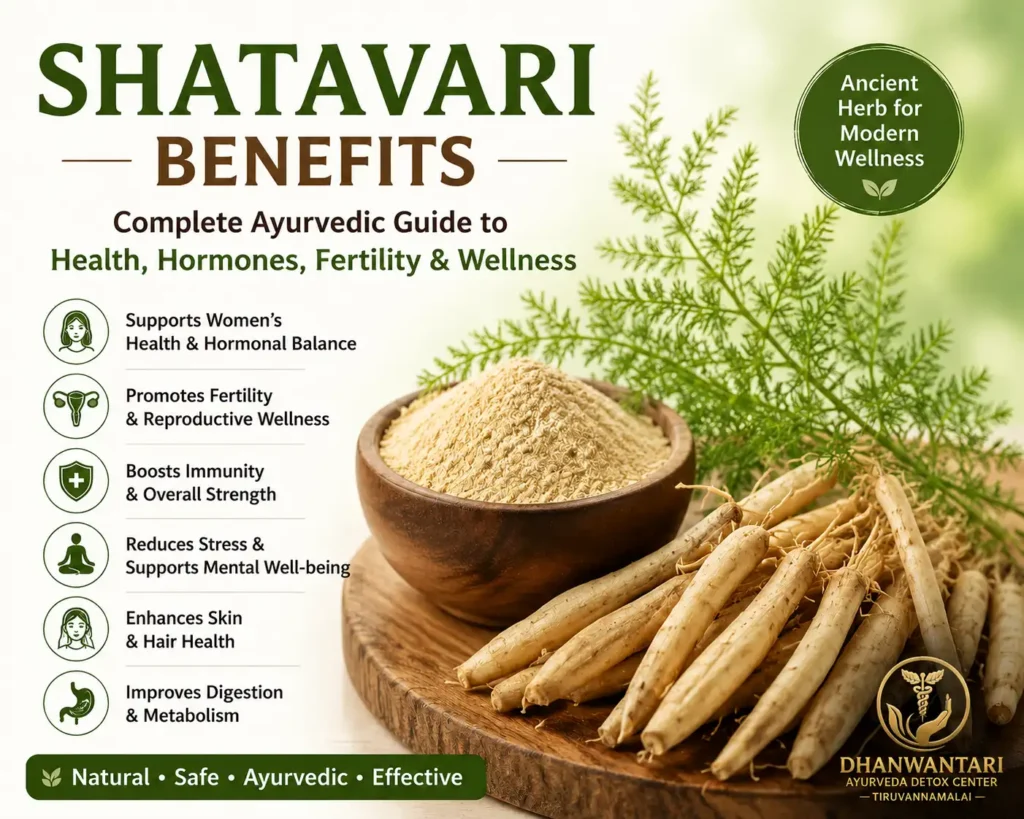
Shatavari is a climbing medicinal plant from the asparagus family used extensively in Ayurvedic medicine. It is classified as a powerful adaptogenic herb that helps the body manage stress and maintain hormonal balance.
In Ayurveda, Shatavari is considered a deeply nourishing and rejuvenating tonic that, in particular, supports the reproductive system, enhances vitality, and promotes overall physical and mental well-being.
Ayurvedic Properties
- Taste (Rasa): Sweet and bitter
- Qualities (Guna): Heavy and unctuous
- Potency (Virya): Cooling
- Post-digestive effect (Vipaka): Sweet
These properties make Shatavari especially effective in balancing Pitta dosha while also gently supporting and nourishing female reproductive health, thereby promoting overall hormonal harmony and well-being.
Other Names of Shatavari
Shatavari is known by different names across Ayurveda, botanical science, and regional languages.
Scientific Name
- Asparagus racemosus
Common English Names
- Wild asparagus
- Indian asparagus
- Climbing asparagus
Sanskrit / Ayurvedic Names
- Shatavari
- Shatavirya
- Shatapadi
Regional Indian Names
- Hindi: Shatavari (शतावरी)
- Tamil: Shatavari / Thanneervittan kizhangu (commonly used herbal name)
- Telugu: Sathavari
- Kannada: Shatavari
- Malayalam: Shatavari
These names are widely used in herbal medicine markets and Ayurvedic formulations.
Shatavari Health Benefits Overview
Shatavari health benefits are linked to its antioxidant, adaptogenic, and phytoestrogen properties. It supports multiple systems in the body:
- Hormonal system
- Reproductive system
- Nervous system
- Immune system
- Digestive system
This makes it a widely used herbal supplement in Ayurveda.
Shatavari Benefits for Women
Asparagus racemosus for women are among its most well-known uses.
Hormonal Balance
It helps regulate female hormones naturally and supports menstrual cycle stability.
Reproductive Health
- Supports uterine health
- Nourishes reproductive tissues
- Improves fertility health
Emotional Wellness
Helps reduce stress, anxiety, and mood swings related to hormonal changes.
Lactation Support
Traditionally used to support breast milk production in new mothers.
Shatavari Benefits for Female Fertility
Shatavari benefits for female fertility include:
- Supporting reproductive tissue nourishment
- Improving hormonal balance
- Reducing stress-related fertility issues
- Supporting healthy ovulation function
It is often used as a natural fertility-support herb in Ayurveda.
Shatavari Benefits for Men
Although traditionally used for women, shatavari benefits for men are also important.
- Supports stamina and vitality
- Helps manage stress and fatigue
- Supports hormonal balance
- Improves general reproductive wellness
Shatavari powder benefits for male users are often included in herbal strength tonics.
Shatavari Powder, Root, Extract & Supplement Benefits
Benefits of Shatavari Powder
- Traditional Ayurvedic preparation
- Supports long-term nourishment
- Easy to consume with milk or water
Shatavari Root Benefits
- Natural source of active compounds
- Supports hormonal and reproductive health
- Anti-inflammatory properties
Asparagus racemosus Extract Benefits
- Highly concentrated form
- Faster absorption
- Used in modern supplements
Shatavari Supplement Benefits
- Convenient dosage
- Standardized formulation
- Easy daily intake
Asparagus racemosus for Skin and Hair
Shatavari Benefits for Skin
- Improves skin hydration
- Supports natural glow
- Helps reduce dryness
Shatavari Benefits for Hair
- Strengthens hair roots
- Reduces hair breakage
- Improves scalp health
Shatavari for Weight Gain and Weight Loss
Weight Gain
Asparagus racemosus for weight gain include:
- Nourishing body tissues
- Improving appetite
- Supporting healthy weight restoration
Weight Loss
Shatavari benefits for weight loss are indirect:
- Reduces stress-related eating
- Improves digestion
- Supports hormonal balance
Asparagus racemosus for Menopause
Shatavari benefits for menopause include:
- Reducing hot flashes
- Improving mood stability
- Supporting hormonal balance
- Improving sleep quality
Shatavari Side Effects (Menstruation & General Use)
Shatavari side effects menstruation are generally mild:
- Mild bloating in some users
- Hormonal sensitivity in rare cases
It should be used carefully in individuals with specific hormonal conditions.
Is Shatavari Safe?
Is shatavari safe? Yes, it is generally safe when used in recommended doses.
Is Shatavari Dangerous?
No, it is not dangerous when used properly. Overuse may cause mild digestive discomfort.
Is Shatavari Good for You?
Yes, it supports:
- Hormonal balance
- Reproductive health
- Stress management
- Overall wellness
Is Shatavari a Hormone?
No, it is not a hormone. It contains plant-based phytoestrogens that support hormonal balance naturally.
How to Use Shatavari
Shatavari Powder
- 1–3 grams daily
- Mix with warm milk or water
Capsules / Supplements
- Standardized dosage
- Easy daily intake
Shatavari Extract
- Concentrated form
- Lower dosage required
Shatavari Kalpa Benefits
- Traditional Ayurvedic formulation
- Supports strength and reproductive health
- Used in restorative therapy
Frequently Asked Questions (FAQ)
What is shatavari benefits?
Shatavari benefits refer to its traditional Ayurvedic uses for supporting hormonal balance, enhancing fertility, strengthening immunity, reducing stress, and promoting overall wellness and vitality.
Is shatavari safe for daily use?
Yes, it is generally safe when used in proper dosage.
Is shatavari dangerous?
No, it is safe when used correctly, though overuse may cause mild digestive issues.
Is shatavari good for you?
Yes, it supports hormonal, reproductive, and general health.
Is shatavari a hormone?
No, it is a herb containing phytoestrogen compounds.
Can men use shatavari?
Yes, it supports stamina, stress relief, and overall vitality in men by helping improve energy levels, enhance resilience to daily stress, and promote general physical and mental well-being.
Conclusion
Shatavari is one of the most powerful Ayurvedic herbs for overall wellness. Its wide range of effects includes hormonal balance, fertility support, stress reduction, and nourishment of body tissues.
KeyAsparagus racemosus include:
- Benefits for women and men
- Fertility and reproductive health support
- Skin and hair nourishment
- Menopause symptom relief
- Safe long-term herbal supplementation
When used correctly and in appropriate dosage, Shatavari serves as a valuable natural Ayurvedic herb for supporting overall health, enhancing vitality, and promoting long-term physical and mental well-being.