Tridosha in Ayurveda: A Complete Guide to Understanding Vata, Pitta, and Kapha for Better Health
Introduction to Ayurveda and Tridosha
Ayurveda, often referred to as the “Science of Life,” is one of the world’s oldest holistic healthcare systems, with roots in India dating back more than 5,000 years. Unlike modern medicine, which primarily focuses on diagnosing and treating diseases, Ayurveda emphasizes preventing illness by maintaining harmony between the body, mind, and spirit.
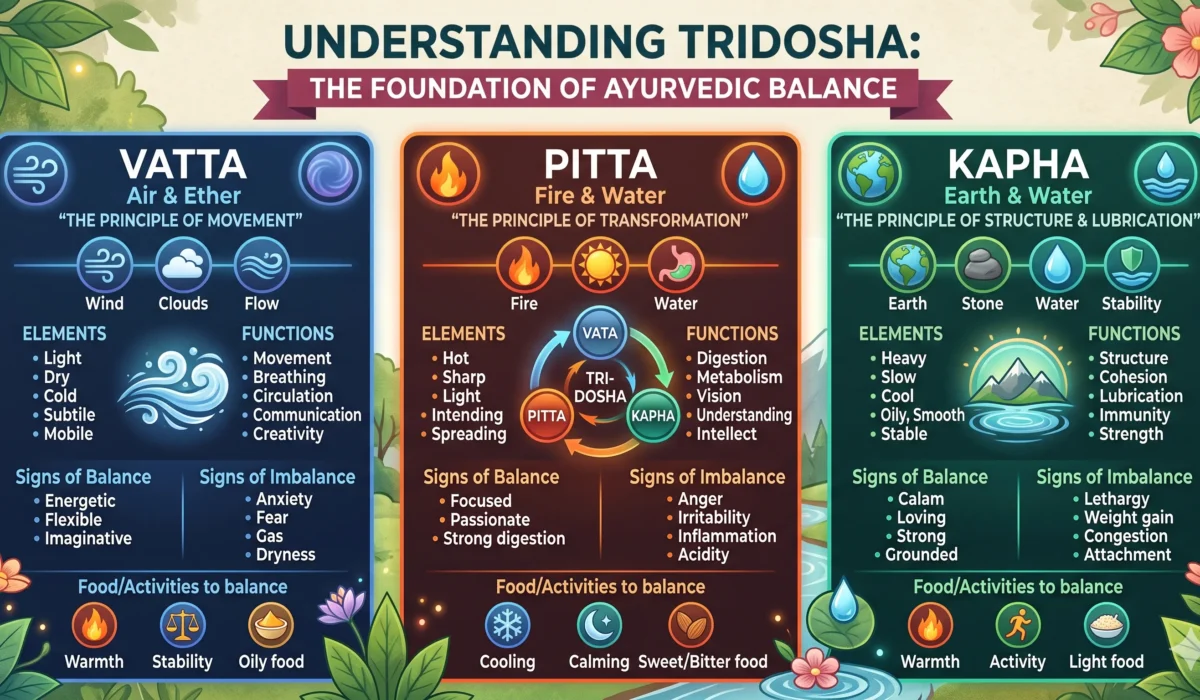
At the heart of Ayurveda lies one of its most fundamental principles—the Tridosha theory. According to Ayurvedic philosophy, every individual is born with a unique combination of three biological energies known as Vata, Pitta, and Kapha. These doshas govern every physiological and psychological function, from digestion and metabolism to emotions, sleep, immunity, and overall vitality.
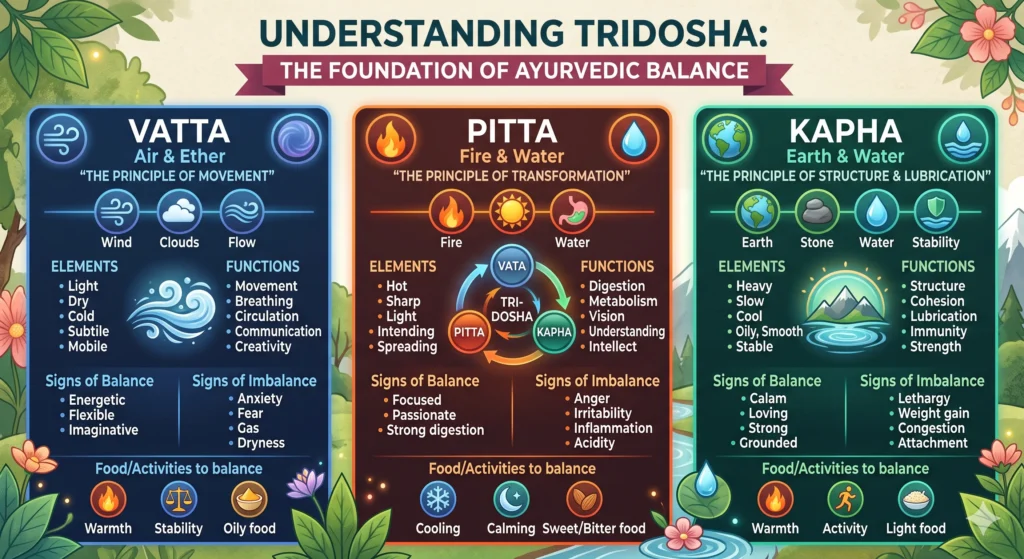
When these doshas remain balanced, the body functions optimally, promoting health, longevity, and emotional well-being. However, when one or more doshas become imbalanced due to improper diet, stress, seasonal changes, poor lifestyle habits, or environmental factors, various health issues may arise.
Understanding your dosha is the first step toward creating a personalized wellness routine that aligns with your body’s natural constitution.
In this comprehensive guide, you’ll learn everything you need to know about Tridosha, including dosha characteristics, Ayurvedic diets, lifestyle recommendations, yoga practices, herbs, diagnosis, and practical strategies for restoring balance naturally.
What is Tridosha in Ayurveda?
The Sanskrit word “Tri” means three, while “Dosha” refers to fundamental bio-energies that regulate the body and mind.
The Tridosha concept explains that all living beings are governed by three primary energies:
- Vata
- Pitta
- Kapha
These energies are formed by combinations of the five universal elements (Pancha Mahabhutas):
- Space (Akasha)
- Air (Vayu)
- Fire (Agni)
- Water (Jala)
- Earth (Prithvi)
Every person possesses all three doshas, but in different proportions. This unique combination determines an individual’s body constitution, personality traits, strengths, vulnerabilities, metabolism, and predisposition to disease.
Rather than labeling one dosha as “good” or “bad,” Ayurveda teaches that each dosha serves essential functions and contributes to overall health when in balance.
Tridosha Meaning
The word “Dosha” literally translates to “that which can become imbalanced.”
Contrary to common misconceptions, doshas are not diseases. They are natural biological principles that coordinate the body’s functioning.
Each dosha has specific qualities (Gunas), locations, functions, and tendencies:
| Dosha | Elements | Primary Function |
| Vata | Air + Space | Movement |
| Pitta | Fire + Water | Transformation |
| Kapha | Earth + Water | Structure & Stability |
Together, these three energies influence:
- Digestion
- Circulation
- Respiration
- Nervous system
- Hormones
- Sleep
- Emotional health
- Immunity
- Growth
- Reproduction
Maintaining harmony among these doshas is considered the cornerstone of Ayurvedic wellness.
Tridosha Theory of Ayurveda
The Tridosha theory explains that every physical and mental process in the human body depends on the balance of Vata, Pitta, and Kapha.
These doshas continuously interact with one another.
For example:
- Vata initiates movement.
- Pitta performs transformation.
- Kapha provides stability.
Imagine cooking a meal:
- Vata moves the ingredients.
- Pitta provides the heat.
- Kapha gives the dish its substance and nourishment.
Similarly, your body requires all three doshas working together to function effectively.
When one dosha becomes excessive or depleted, the balance is disturbed, leading to discomfort and disease.
Ayurveda aims to restore equilibrium rather than simply suppress symptoms.
What are the Three Doshas?
Each dosha has unique characteristics, functions, and physical manifestations.
Although everyone has all three doshas, one or two usually dominate.
Understanding your dominant dosha helps personalize your:
- Diet
- Exercise
- Sleep routine
- Stress management
- Herbal support
- Seasonal care
- Daily lifestyle
Let’s explore each dosha in detail.
Vata Dosha Explained
Vata is composed of Air and Space elements.
It governs all movement within the body.
Characteristics of Vata
People with dominant Vata often have:
- Lean body frame
- Dry skin
- Cold hands and feet
- Quick thinking
- High creativity
- Fast speech
- Irregular appetite
- Light sleep
- Active imagination
Functions of Vata
Vata regulates:
- Breathing
- Circulation
- Nerve impulses
- Elimination
- Speech
- Creativity
- Movement
- Joint mobility
Signs of Balanced Vata
Balanced Vata supports:
- Creativity
- Enthusiasm
- Flexibility
- Healthy digestion
- Mental alertness
- Adaptability
Signs of Vata Imbalance
When aggravated, Vata may contribute to:
- Anxiety
- Insomnia
- Constipation
- Dry skin
- Bloating
- Gas
- Fatigue
- Restlessness
- Poor concentration
- Joint stiffness
Common triggers include:
- Cold weather
- Excess travel
- Irregular meals
- Stress
- Lack of sleep
- Excessive fasting
Ayurveda recommends warm, nourishing foods, regular routines, oil massage, gentle yoga, and adequate rest to calm Vata.
Pitta Dosha Explained
Pitta is made of Fire and Water.
It governs metabolism and transformation.
Characteristics of Pitta
People with dominant Pitta often have:
- Medium build
- Warm body temperature
- Strong digestion
- Sharp intellect
- Leadership qualities
- Determination
- Excellent focus
Functions of Pitta
Pitta controls:
- Digestion
- Metabolism
- Hormones
- Body temperature
- Vision
- Intelligence
- Skin complexion
- Appetite
Balanced Pitta
Balanced Pitta promotes:
- Confidence
- Intelligence
- Healthy digestion
- Good leadership
- Strong motivation
- Efficient metabolism
Pitta Imbalance
Excess Pitta may manifest as:
- Acid reflux
- Heartburn
- Skin rashes
- Irritability
- Anger
- Inflammation
- Excess sweating
- Loose stools
- Hair thinning
- Migraines
Common triggers include spicy foods, excessive heat, alcohol, chronic stress, overwork, and sleep deprivation.
Cooling foods, relaxation techniques, proper hydration, and moderation help maintain Pitta balance.
Kapha Dosha Explained
Kapha is formed from Earth and Water elements.
It provides structure, lubrication, and endurance.
Characteristics of Kapha
Individuals with dominant Kapha often exhibit:
- Strong, sturdy build
- Smooth skin
- Thick hair
- Calm temperament
- Excellent stamina
- Deep sleep
- Loyal nature
- Good long-term memory
Functions of Kapha
Kapha supports:
- Immunity
- Joint lubrication
- Tissue growth
- Stability
- Emotional resilience
- Strength
- Hydration
- Fertility
Balanced Kapha
Balanced Kapha contributes to:
- Patience
- Compassion
- Strong immunity
- Emotional stability
- Endurance
- Healthy joints
Kapha Imbalance
Excess Kapha can lead to:
- Weight gain
- Sluggish digestion
- Congestion
- Excess mucus
- Water retention
- Fatigue
- Depression
- Slow metabolism
- Oversleeping
Heavy, oily foods, inactivity, excessive sleep, and cold weather often aggravate Kapha. Regular exercise, lighter meals, warming spices, and stimulating activities are generally recommended.
Understanding Prakriti (Body Constitution)
Prakriti refers to your innate body constitution established at conception. It is your natural balance of Vata, Pitta, and Kapha and generally remains constant throughout life.
Your Prakriti influences:
- Body type
- Digestive strength
- Energy levels
- Personality
- Sleep patterns
- Disease tendencies
- Food preferences
- Emotional responses
Understanding your Prakriti enables you to make informed lifestyle choices that support long-term health rather than following generic wellness advice.
Vikriti vs Prakriti
Although these terms are closely related, they represent different aspects of your health.
Prakriti is your natural constitution—your baseline state.
Vikriti is your current state of imbalance. It reflects how lifestyle, diet, stress, environment, age, and seasonal changes have affected your doshas.
For example, a person with a Pitta-dominant Prakriti may temporarily experience a Vata imbalance due to irregular eating habits and chronic stress.
Ayurvedic treatment focuses on identifying both Prakriti and Vikriti so that recommendations can restore balance while respecting your unique constitution.
How Do I Know My Dosha?
Many people wonder how to identify their dominant dosha. While online quizzes can provide a general idea, they are not a substitute for a professional Ayurvedic assessment.
Some common indicators include:
- Vata-dominant: Lean build, dry skin, quick thinking, irregular appetite, light sleep.
- Pitta-dominant: Medium build, strong appetite, warm body, driven personality, tendency toward irritability when stressed.
- Kapha-dominant: Larger frame, calm nature, steady energy, slower digestion, deep sleep.
Keep in mind that many individuals have dual constitutions, such as Vata-Pitta or Pitta-Kapha, where two doshas are nearly equal in influence.
Ayurvedic Diagnosis
Traditional Ayurvedic diagnosis goes beyond identifying symptoms. It seeks to understand the root cause of imbalance by evaluating the whole person.
An Ayurvedic practitioner may assess:
- Pulse (Nadi Pariksha)
- Tongue appearance
- Skin texture
- Eyes
- Voice
- Digestion
- Sleep quality
- Appetite
- Energy levels
- Emotional patterns
- Lifestyle habits
- Medical history
This comprehensive evaluation helps determine your Prakriti, identify your current Vikriti, and create a personalized plan that may include dietary guidance, daily routines, herbal support, yoga, breathing exercises, and stress-management techniques.
Rather than applying a one-size-fits-all approach, Ayurvedic diagnosis aims to restore harmony in a way that aligns with your unique constitution and long-term wellness goals.
Disclaimer: Ayurveda is a traditional system of health and wellness. It complements healthy lifestyle practices but should not replace professional medical diagnosis or treatment. If you have persistent symptoms or a medical condition, consult a qualified healthcare professional.
Signs of Dosha Imbalance
According to Ayurveda, disease rarely appears overnight. Instead, subtle imbalances develop over time before manifesting as noticeable health concerns. Recognizing these early warning signs can help you take preventive measures before minor issues become chronic conditions.
Every dosha exhibits distinct symptoms when it becomes aggravated or depleted.
Signs of Vata Imbalance
Since Vata governs movement and the nervous system, an imbalance often affects both physical and mental functions.
Common symptoms include:
- Dry skin and hair
- Constipation
- Gas and bloating
- Cold hands and feet
- Joint pain
- Muscle stiffness
- Anxiety
- Nervousness
- Restlessness
- Difficulty sleeping
- Irregular appetite
- Fatigue
- Poor concentration
- Frequent worry
Long-term Vata aggravation may contribute to chronic stress, insomnia, neurological disorders, and digestive irregularities.
Signs of Pitta Imbalance
Pitta controls digestion, metabolism, and body heat. Excess Pitta generally produces inflammatory conditions.
Common symptoms include:
- Heartburn
- Acid reflux
- Loose stools
- Excessive hunger
- Increased thirst
- Skin rashes
- Acne
- Redness
- Hair thinning
- Irritability
- Anger
- Frustration
- Excessive sweating
- Burning sensations
Persistent Pitta imbalance may increase the risk of ulcers, inflammatory skin disorders, liver dysfunction, and hypertension in susceptible individuals.
Signs of Kapha Imbalance
Kapha governs structure and lubrication. When excessive, it slows many bodily processes.
Symptoms may include:
- Weight gain
- Water retention
- Slow digestion
- Feeling heavy
- Excess mucus
- Frequent colds
- Sinus congestion
- Lethargy
- Depression
- Lack of motivation
- Oversleeping
- High cholesterol tendencies
- Slow metabolism
Early intervention through diet and lifestyle changes often helps restore Kapha balance before more significant health concerns develop.
Tridosha and Prana
In Ayurveda, Prana refers to the vital life force that sustains every living being. It is closely connected with breathing, consciousness, energy flow, and overall vitality.
While Prana flows throughout the body, each dosha influences it differently.
Vata and Prana
Vata is the primary carrier of Prana.
It regulates:
- Breathing
- Nervous system activity
- Communication between organs
- Sensory perception
- Mental alertness
When Vata is balanced, Prana flows freely, supporting creativity, mental clarity, and emotional resilience.
Pitta and Prana
Pitta transforms Prana into usable energy.
It supports:
- Cellular metabolism
- Digestive efficiency
- Mental processing
- Decision-making
- Intelligence
Balanced Pitta enables individuals to use their energy productively without burning out.
Kapha and Prana
Kapha stores and preserves energy.
It provides:
- Physical endurance
- Emotional stability
- Tissue nourishment
- Strength
- Immunity
Healthy Kapha ensures that Prana remains grounded and sustainable over time.
Tridosha and Mental Well-being
Ayurveda views mental health as inseparable from physical health. Each dosha influences emotional patterns and cognitive functioning.
Balanced Vata Mind
Balanced Vata promotes:
- Creativity
- Curiosity
- Enthusiasm
- Adaptability
- Imagination
Imbalanced Vata may contribute to:
- Fear
- Anxiety
- Overthinking
- Insomnia
- Panic
- Mental exhaustion
Balanced Pitta Mind
Healthy Pitta supports:
- Leadership
- Confidence
- Intelligence
- Focus
- Discipline
Excess Pitta may result in:
- Anger
- Perfectionism
- Impatience
- Criticism
- Irritability
- Burnout
Balanced Kapha Mind
Balanced Kapha encourages:
- Compassion
- Forgiveness
- Calmness
- Emotional security
- Loyalty
When Kapha becomes excessive, it may lead to:
- Emotional attachment
- Lack of motivation
- Sadness
- Resistance to change
- Mental sluggishness
Maintaining dosha balance helps cultivate emotional resilience and greater mental clarity.
Tridosha and Physical Health
Every physiological process depends on the coordinated action of the three doshas.
Vata Supports
- Circulation
- Breathing
- Nervous system
- Movement
- Elimination
- Speech
Pitta Supports
- Digestion
- Hormone production
- Metabolism
- Vision
- Body temperature
- Cellular function
Kapha Supports
- Immunity
- Joint lubrication
- Bone strength
- Muscle development
- Tissue repair
- Hydration
When all three doshas function harmoniously, the body naturally maintains balance and supports overall well-being.
Tridosha and Psychological Health
Ayurveda recognizes that personality traits are influenced by an individual’s dominant dosha.
Vata Personality
Typically:
- Artistic
- Energetic
- Innovative
- Expressive
- Curious
Challenges:
- Inconsistency
- Forgetfulness
- Nervousness
Pitta Personality
Usually:
- Ambitious
- Organized
- Determined
- Intelligent
- Goal-oriented
Challenges:
- Impatience
- Competitiveness
- Perfectionism
Kapha Personality
Generally:
- Patient
- Caring
- Reliable
- Compassionate
- Calm
Challenges:
- Resistance to change
- Possessiveness
- Laziness
Understanding these tendencies helps individuals improve self-awareness and choose lifestyle practices that support emotional balance.
Ayurvedic Lifestyle (Dinacharya)
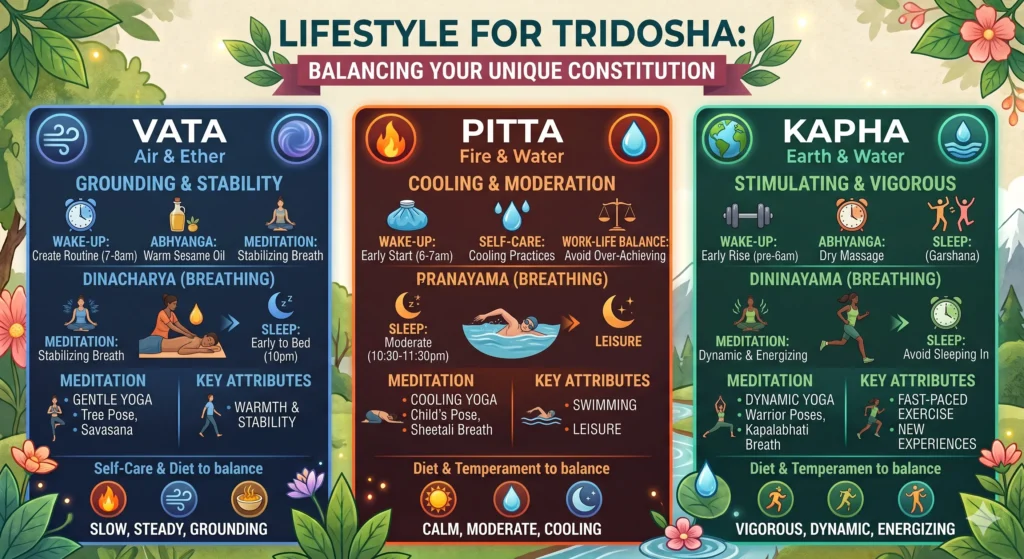
One of Ayurveda’s greatest strengths is its emphasis on daily routines, known as Dinacharya. Following a consistent routine helps synchronize the body’s biological rhythms with nature.
A balanced daily routine may include:
Wake Up Early
Ayurveda recommends waking before sunrise, when the environment is calm and Vata energy supports mental clarity.
Tongue Cleaning
Using a tongue scraper each morning removes accumulated debris and supports oral hygiene.
Oil Pulling
Swishing sesame or coconut oil in the mouth for several minutes may help maintain oral cleanliness and fresh breath.
Hydration
Drinking warm water upon waking may support hydration and digestive function.
Abhyanga (Self-Oil Massage)
Massaging the body with warm herbal oil may help:
- Nourish the skin
- Improve circulation
- Relax muscles
- Calm the nervous system
Sesame oil is traditionally recommended for Vata, coconut oil for Pitta, and lighter oils such as mustard (where appropriate) for Kapha, depending on individual needs and practitioner guidance.
Exercise
Ayurveda encourages daily movement appropriate for your constitution.
Examples include:
- Walking
- Yoga
- Cycling
- Swimming
- Stretching
- Strength training in moderation
Avoid excessive exercise that leaves you completely exhausted.
Meditation
Daily meditation helps calm the mind and supports emotional balance.
Even 10–20 minutes of mindfulness or breath awareness can positively influence stress levels.
Regular Meals
Eating meals at consistent times helps support digestive health.
Ayurveda generally recommends making lunch the largest meal of the day, when digestive fire is strongest.
Early Dinner
A light evening meal, eaten a few hours before bedtime, allows for more comfortable digestion during the night.
Quality Sleep
Going to bed before 10 PM is traditionally recommended to support natural circadian rhythms and restorative sleep.
Seasonal Lifestyle (Ritucharya)
Just as the doshas fluctuate throughout the day, they also change with the seasons. Ritucharya refers to adapting diet and lifestyle according to seasonal variations.
Spring (Kapha Season)
Kapha naturally accumulates during winter and often becomes aggravated in spring.
Recommended practices:
- Eat lighter meals
- Increase physical activity
- Reduce dairy and sweets
- Favor warming spices
- Spend time outdoors
Summer (Pitta Season)
Heat increases Pitta.
Helpful strategies include:
- Stay hydrated
- Eat cooling fruits and vegetables
- Avoid excessive spicy foods
- Limit alcohol
- Protect yourself from prolonged sun exposure
Autumn and Early Winter (Vata Season)
Dry, cool weather increases Vata.
Recommendations include:
- Warm cooked foods
- Healthy fats
- Regular meal times
- Gentle yoga
- Oil massage
- Extra rest
Late Winter (Kapha Accumulation)
As colder weather continues, heavier foods may increase Kapha.
Focus on:
- Warm herbal teas
- Regular exercise
- Lighter dinners
- Warming spices such as ginger and black pepper (as tolerated)
Why Personalized Ayurveda Matters
Although general recommendations are helpful, Ayurveda emphasizes individualized care.
Two people with the same symptom—such as indigestion or fatigue—may receive entirely different recommendations depending on:
- Their Prakriti (natural constitution)
- Their Vikriti (current imbalance)
- Age
- Climate
- Occupation
- Stress levels
- Digestive strength
- Sleep quality
- Medical history
This personalized approach is one of Ayurveda’s defining characteristics and helps practitioners address the underlying causes of imbalance rather than focusing solely on symptoms.
Key Takeaways
- Tridosha influences every aspect of physical and mental health.
- Early recognition of dosha imbalance supports preventive healthcare.
- Prana, the body’s vital energy, depends on balanced doshas.
- Daily routines (Dinacharya) help maintain long-term wellness.
- Seasonal adaptations (Ritucharya) allow the body to stay in harmony with changing environmental conditions.
- Personalized Ayurvedic guidance considers the whole individual rather than isolated symptoms.
Disclaimer: Ayurvedic practices are intended to support overall wellness and should complement—not replace—medical care. If you have a diagnosed medical condition, persistent symptoms, or are taking prescription medications, consult a qualified healthcare professional before making significant changes to your diet, lifestyle, or supplement regimen.
Ayurvedic Diet According to Dosha
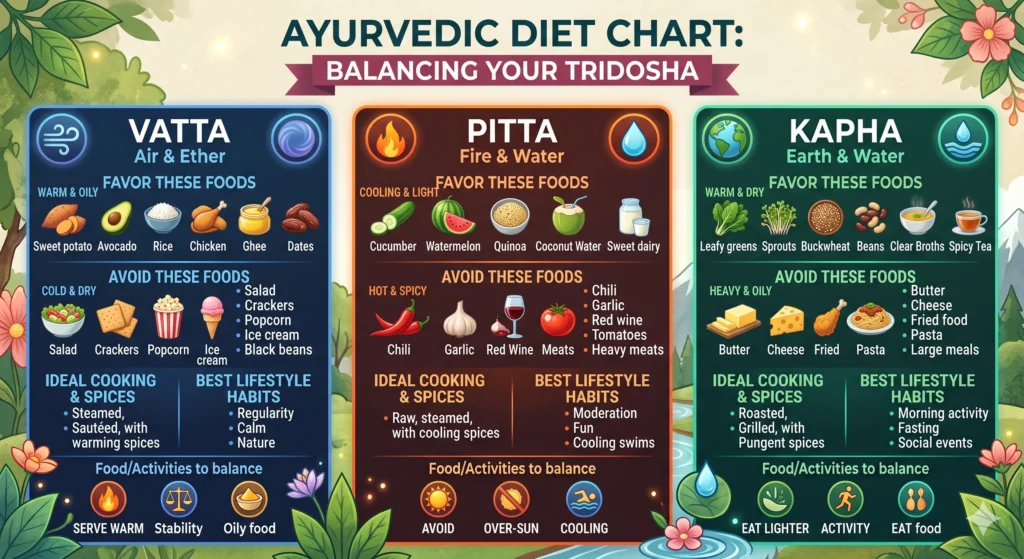
Ayurveda believes that food is one of the most powerful forms of medicine. Rather than following a universal diet, Ayurvedic nutrition is personalized according to your dominant dosha (Prakriti), current imbalance (Vikriti), age, digestive strength (Agni), season, and lifestyle.
The guiding principle is simple: like increases like, and opposites bring balance. For example, if Vata is naturally cold and dry, warm and nourishing foods help restore equilibrium.
General Dietary Principles in Ayurveda
Regardless of your dosha, Ayurveda encourages:
- Eat fresh, seasonal, and minimally processed foods.
- Prefer warm, freshly cooked meals over refrigerated leftovers.
- Eat only when genuinely hungry.
- Avoid overeating.
- Chew food thoroughly.
- Maintain regular meal timings.
- Include all six tastes (sweet, sour, salty, bitter, pungent, and astringent) in appropriate proportions.
- Drink water mindfully rather than excessively during meals.
- Practice mindful eating without distractions.
Following these foundational principles helps strengthen digestion and supports overall health.
Vata Balancing Diet
Since Vata is characterized by dryness, coldness, and lightness, the ideal Vata diet emphasizes warmth, moisture, nourishment, and regularity.
Best Foods for Vata
Grains
- Rice
- Oats
- Quinoa
- Wheat
- Millet (in moderation)
Vegetables
Cooked vegetables are generally preferred.
Examples include:
- Sweet potatoes
- Carrots
- Pumpkin
- Beetroot
- Asparagus
- Green beans
- Squash
Fruits
- Bananas
- Mangoes
- Papaya
- Dates
- Figs
- Avocados
- Grapes
Healthy Fats
- Ghee
- Sesame oil
- Olive oil
- Coconut (in moderation)
Protein Sources
- Lentils (well-cooked)
- Mung beans
- Paneer
- Eggs (if included in the diet)
- Fish (where appropriate)
Spices
Warming spices support Vata digestion:
- Ginger
- Cinnamon
- Cardamom
- Cumin
- Fennel
- Cloves
- Nutmeg
Foods to Limit for Vata
- Raw salads
- Cold drinks
- Ice cream
- Dry cereals
- Popcorn
- Crackers
- Excess caffeine
- Excess fasting
- Frozen foods
Sample Vata Meal Plan
Breakfast
Warm oatmeal with dates, almonds, cinnamon, and ghee.
Lunch
Rice, mung dal, cooked vegetables, and homemade yogurt (if well tolerated).
Snack
Herbal tea with soaked almonds.
Dinner
Vegetable soup with quinoa and sautéed vegetables.
Pitta Balancing Diet
Pitta is naturally hot, sharp, and intense. Therefore, cooling, hydrating, and mildly sweet foods help maintain balance.
Best Foods for Pitta
Grains
- Barley
- Rice
- Oats
- Quinoa
Vegetables
- Cucumber
- Broccoli
- Zucchini
- Lettuce
- Green beans
- Asparagus
- Celery
Fruits
- Apples
- Pears
- Watermelon
- Pomegranate
- Coconut
- Grapes
- Sweet berries
Dairy
If tolerated:
- Milk
- Ghee
- Fresh cottage cheese
Healthy Fats
- Coconut oil
- Ghee
- Olive oil
Cooling Herbs
- Coriander
- Mint
- Fennel
- Cilantro
Foods to Limit for Pitta
- Spicy curries
- Chilies
- Tomatoes (large amounts)
- Vinegar
- Alcohol
- Coffee
- Fried foods
- Sour pickles
- Excess garlic
Sample Pitta Meal Plan
Breakfast
Fresh fruit with soaked almonds.
Lunch
Rice, steamed vegetables, mung dal, and cucumber salad.
Snack
Coconut water or herbal tea.
Dinner
Vegetable khichdi with steamed greens.
Kapha Balancing Diet
Kapha possesses heavy, cool, oily, and slow qualities. To counterbalance these characteristics, Ayurveda recommends lighter, warming, and stimulating foods.
Best Foods for Kapha
Grains
- Barley
- Buckwheat
- Millet
- Quinoa
Vegetables
- Leafy greens
- Cabbage
- Cauliflower
- Radish
- Brussels sprouts
- Bell peppers
Fruits
- Apples
- Pears
- Pomegranate
- Berries
Legumes
- Lentils
- Chickpeas
- Kidney beans
- Black beans
Spices
Stimulating spices include:
- Black pepper
- Turmeric
- Ginger
- Mustard seeds
- Cinnamon
- Cloves
Foods to Limit for Kapha
- Fried foods
- Sugary desserts
- Cheese
- Ice cream
- Heavy dairy
- Excess wheat
- White rice (large portions)
- Soft drinks
- Processed snacks
Sample Kapha Meal Plan
Breakfast
Warm ginger tea with lightly spiced vegetable upma.
Lunch
Mixed vegetable soup with lentils.
Snack
Apple slices with herbal tea.
Dinner
Steamed vegetables with quinoa.
Tridosha Diet Plan
Some individuals have a relatively balanced constitution or wish to support all three doshas. A Tridosha-friendly diet emphasizes moderation and variety.
Breakfast
- Warm porridge
- Seasonal fruits
- Herbal tea
Lunch
- Brown rice
- Dal
- Mixed vegetables
- Small amount of ghee
- Fresh salad (adjust quantity according to season and digestion)
Evening Snack
- Fresh fruit
- Roasted seeds
- Herbal infusion
Dinner
- Vegetable soup
- Khichdi
- Steamed vegetables
Daily Habits
- Eat at consistent times.
- Stay hydrated.
- Avoid overeating.
- Favor freshly prepared meals.
- Reduce ultra-processed foods.
Foods to Balance All Three Doshas
Certain foods are generally considered balancing for most constitutions when consumed appropriately.
Examples include:
- Mung beans
- Seasonal vegetables
- Ghee (in moderation)
- Amla (Indian gooseberry)
- Pumpkin
- Squash
- Cucumber
- Fresh herbs
- Turmeric
- Coriander
- Cumin
- Fennel
- Fresh coconut (moderation)
- Whole grains
- Pomegranate
- Soaked almonds
Remember that portion size, preparation method, climate, and individual constitution all influence how foods affect the body.
Ayurvedic Superfoods
Ayurveda recognizes several foods and herbs for their nourishing and rejuvenating qualities.
Turmeric
Known for its traditional use in supporting healthy inflammatory responses and digestion.
Potential benefits include:
- Supports immunity
- Promotes joint health
- Supports digestion
- Rich in antioxidants
Amla (Indian Gooseberry)
A nutrient-dense fruit traditionally used in Ayurvedic formulations.
Benefits include:
- Rich in Vitamin C
- Supports immunity
- Promotes healthy digestion
- Supports skin and hair health
Ghee
Clarified butter has long been valued in Ayurveda.
Traditionally believed to:
- Nourish tissues
- Support digestion when used moderately
- Enhance nutrient absorption
- Promote healthy skin
Moringa
Often called a nutritional powerhouse.
Provides:
- Vitamins
- Minerals
- Plant protein
- Antioxidants
Sesame Seeds
Traditionally recommended, especially for Vata constitutions.
Benefits include:
- Healthy fats
- Calcium
- Iron
- Magnesium
Dates
Naturally sweet and nourishing.
Often recommended to support:
- Energy
- Vitality
- Tissue nourishment
Agni (Digestive Fire)
One of Ayurveda’s most important concepts is Agni, the digestive fire responsible for transforming food into energy and nourishment.
Healthy Agni supports:
- Efficient digestion
- Nutrient absorption
- Strong immunity
- Healthy metabolism
- Mental clarity
Weak Agni may contribute to:
- Indigestion
- Bloating
- Fatigue
- Poor nutrient absorption
- Toxin accumulation
Ways to Support Healthy Agni
- Eat only when hungry.
- Avoid overeating.
- Consume warm meals.
- Limit excessive snacking.
- Include digestive spices like ginger, cumin, coriander, and fennel.
- Maintain regular meal timings.
Strong digestion is considered the foundation of health in Ayurveda.
Ama (Toxins)
When digestion becomes weak, Ayurveda teaches that improperly digested food forms Ama, a sticky toxic residue believed to obstruct bodily channels.
Possible signs of Ama include:
- Coated tongue
- Bad breath
- Brain fog
- Sluggishness
- Constipation
- Joint discomfort
- Low appetite
- Fatigue
Ayurvedic strategies to reduce Ama often include:
- Improving digestion
- Eating lighter meals
- Staying physically active
- Drinking warm water
- Following a consistent routine
- Avoiding overeating
Ojas and Immunity
Ojas is considered the refined essence of all bodily tissues and is associated with vitality, resilience, and immunity.
Healthy Ojas is believed to promote:
- Strong immunity
- Emotional stability
- Healthy complexion
- Good energy
- Restful sleep
- Mental clarity
- Longevity
Practices that traditionally support Ojas include:
- Nutritious foods
- Adequate sleep
- Meditation
- Positive relationships
- Stress management
- Gentle exercise
- Balanced digestion
Ayurvedic Herbs for Dosha Balance
Herbal support is an important part of Ayurveda, but herbs should ideally be selected based on an individual’s constitution and health status.
Ashwagandha
Traditionally used to support:
- Stress resilience
- Energy
- Sleep quality
- Nervous system balance
Often recommended for individuals with Vata tendencies.
Brahmi
Traditionally associated with:
- Memory
- Concentration
- Mental clarity
- Relaxation
Triphala
A classical Ayurvedic formulation containing three fruits.
Traditionally used to support:
- Digestive health
- Regular elimination
- Gentle detoxification
Guduchi (Giloy)
Traditionally valued for supporting:
- Immune function
- General wellness
- Recovery
Shatavari
Commonly used in Ayurveda to support:
- Women’s wellness
- Hormonal balance
- Tissue nourishment
Turmeric
Beyond its culinary uses, turmeric is widely incorporated into Ayurvedic wellness practices to support digestive and joint health.
Important Note on Herbal Supplements
Although Ayurvedic herbs have a long history of traditional use, they are not appropriate for everyone. Some herbs may interact with medications, affect pregnancy, or be unsuitable for certain medical conditions.
Always consult a qualified Ayurvedic practitioner or healthcare provider before beginning herbal supplements, particularly if you are pregnant, breastfeeding, have chronic illnesses, or take prescription medications.
Key Takeaways
- Ayurvedic nutrition is personalized rather than one-size-fits-all.
- A Vata-balancing diet emphasizes warm, nourishing foods.
- A Pitta-balancing diet focuses on cooling and hydrating foods.
- A Kapha-balancing diet favors lighter, warming meals.
- Healthy Agni is central to digestion and overall wellness.
- Reducing Ama supports optimal health.
- Ojas represents vitality and resilience.
- Herbs can complement a balanced lifestyle when chosen appropriately and under professional guidance.
Yoga for Tridosha
Yoga and Ayurveda are sister sciences that work together to promote holistic health. While Ayurveda focuses on balancing the body’s internal energies through diet, lifestyle, and herbs, yoga complements these practices by improving physical strength, flexibility, breathing, and mental clarity.
The ideal yoga practice varies according to your dominant dosha.
Yoga for Vata Dosha
Since Vata is associated with movement, coldness, and irregularity, grounding and calming yoga practices are most beneficial.
Recommended Yoga Poses
- Mountain Pose (Tadasana)
- Child’s Pose (Balasana)
- Tree Pose (Vrikshasana)
- Cobra Pose (Bhujangasana)
- Seated Forward Fold (Paschimottanasana)
- Legs-Up-the-Wall Pose (Viparita Karani)
Best Practices
- Move slowly and mindfully.
- Hold poses for longer durations.
- Practice in a warm environment.
- Focus on deep breathing and relaxation.
Yoga for Pitta Dosha
Pitta individuals benefit from cooling, non-competitive yoga sessions that reduce internal heat and stress.
Recommended Yoga Poses
- Moon Salutation
- Camel Pose (Ustrasana)
- Bridge Pose (Setu Bandhasana)
- Seated Twist
- Standing Forward Bend
- Supine Spinal Twist
Best Practices
- Avoid overheating.
- Practice during cooler parts of the day.
- Focus on relaxation instead of performance.

Yoga for Kapha Dosha
Kapha benefits from dynamic and energizing yoga sequences that stimulate circulation and metabolism.
Recommended Yoga Poses
- Sun Salutations
- Warrior Series
- Chair Pose
- Boat Pose
- Plank Pose
- Triangle Pose
Best Practices
- Maintain an active pace.
- Include cardiovascular movement.
- Practice consistently.
- Challenge yourself while maintaining proper form.
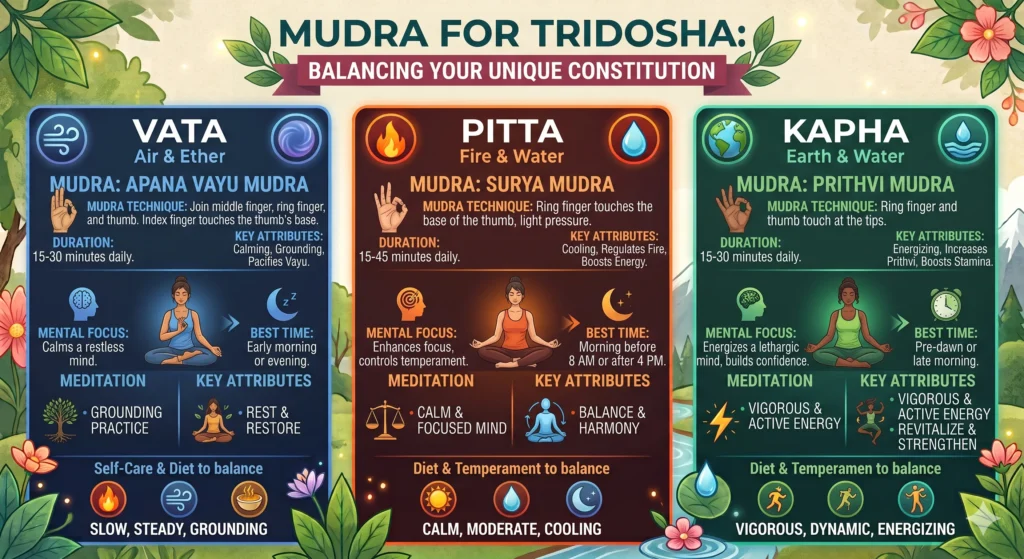
Mudras for Dosha Balance
Mudras are symbolic hand gestures used in yoga and meditation to influence the body’s energy flow.
Although scientific evidence is limited, many practitioners find mudras to be a calming addition to meditation and breathing exercises.
Vata Mudra
May help support:
- Relaxation
- Emotional stability
- Grounding
Practice: 15–20 minutes during meditation.
Pitta Mudra
Traditionally used to encourage:
- Calmness
- Emotional balance
- Cooling energy
Practice alongside slow breathing.
Kapha Mudra
Often used to stimulate:
- Energy
- Motivation
- Mental alertness
Ideal during morning meditation sessions.
Stress Relief Through Ayurveda
Chronic stress affects digestion, sleep, immunity, and emotional well-being. Ayurveda emphasizes addressing the root causes of stress rather than simply masking symptoms.
Ayurvedic Stress Management Tips
Follow a Daily Routine
Consistency helps regulate the nervous system and supports hormonal balance.
Prioritize Sleep
Aim for 7–9 hours of quality sleep each night. A regular bedtime can improve restorative rest.
Practice Meditation
Even 10–20 minutes of daily meditation may help reduce stress and improve focus.
Breathwork (Pranayama)
Gentle breathing exercises such as diaphragmatic breathing or alternate nostril breathing are commonly used in Ayurvedic wellness routines to promote relaxation.
Abhyanga (Self-Oil Massage)
Warm oil massage before bathing may help:
- Relax muscles
- Calm the mind
- Nourish the skin
- Reduce feelings of tension
Spend Time in Nature
Walking outdoors, gardening, or simply sitting in a peaceful environment can support mental well-being.
Weight Management with Ayurveda
Ayurveda approaches healthy weight management by focusing on metabolism, digestion, lifestyle, and mindful eating rather than restrictive dieting.
General Ayurvedic Recommendations
- Eat only when hungry.
- Avoid emotional eating.
- Make lunch the largest meal of the day.
- Reduce highly processed foods.
- Stay physically active.
- Improve digestive health.
- Get adequate sleep.
- Manage stress effectively.
Weight Loss for Kapha
Focus on:
- Regular exercise
- Warm meals
- Smaller portions
- Spices such as ginger, turmeric, and black pepper (as tolerated)
- Limiting sugary and fried foods
Weight Maintenance for Pitta
Focus on:
- Balanced portions
- Cooling foods
- Avoiding excessive spicy or oily meals
- Stress management
Healthy Weight Gain for Vata
Emphasize:
- Nutrient-dense meals
- Healthy fats
- Regular eating schedule
- Adequate rest
- Strength-building exercises
Preventive Healthcare in Ayurveda
One of Ayurveda’s greatest strengths is its preventive approach. Rather than waiting for disease to develop, Ayurveda encourages daily habits that support long-term health.
Preventive healthcare strategies include:
- Following Dinacharya (daily routine)
- Adapting to seasonal changes (Ritucharya)
- Eating according to your constitution
- Maintaining healthy digestion (Agni)
- Reducing Ama
- Practicing yoga and meditation
- Managing stress
- Staying physically active
- Getting sufficient sleep
- Seeking periodic Ayurvedic assessments
By identifying subtle imbalances early, preventive care aims to reduce the likelihood of more serious health issues over time.
Personalized Ayurvedic Treatment
No two individuals are exactly alike, which is why Ayurveda emphasizes personalized care.
A qualified Ayurvedic practitioner considers factors such as:
- Prakriti (natural constitution)
- Vikriti (current imbalance)
- Age
- Digestive strength
- Lifestyle
- Occupation
- Climate
- Sleep patterns
- Emotional health
- Medical history
Based on this assessment, a personalized wellness plan may include:
- Dietary recommendations
- Lifestyle modifications
- Herbal support (when appropriate)
- Yoga practices
- Breathing exercises
- Detoxification therapies (if indicated)
- Stress management techniques
This individualized approach is designed to address underlying imbalances while supporting overall well-being.
Benefits of Ayurvedic Consultation
Consulting a qualified Ayurvedic practitioner can provide guidance tailored to your unique constitution and health goals.
Potential benefits include:
- Better understanding of your dosha
- Personalized nutrition guidance
- Lifestyle recommendations
- Improved digestive health
- Stress management support
- Sleep optimization
- Wellness planning
- Long-term preventive care
For individuals seeking a holistic approach, an Ayurvedic consultation can complement healthy lifestyle practices and conventional medical care.
Frequently Asked Questions (FAQs)
1. What is the Tridosha theory in Ayurveda?
The Tridosha theory explains that three bio-energies—Vata, Pitta, and Kapha—govern all physical, mental, and physiological processes. Maintaining balance among these doshas is central to Ayurvedic wellness.
2. Can a person have more than one dominant dosha?
Yes. Many people have dual constitutions, such as Vata-Pitta or Pitta-Kapha. Some individuals may even have a relatively balanced combination of all three doshas.
3. How can I determine my dosha?
A qualified Ayurvedic practitioner can assess your dosha through a comprehensive evaluation of your physical characteristics, digestion, lifestyle, emotional patterns, and health history. Online quizzes can offer a general indication but are not a substitute for professional assessment.
4. Is Ayurveda scientifically proven?
Some Ayurvedic practices—such as yoga, meditation, mindful eating, and the use of certain herbs—have been studied for specific health outcomes. However, many traditional Ayurvedic concepts require further high-quality scientific research. Ayurveda is best viewed as a complementary wellness system rather than a replacement for evidence-based medical care.
5. Can Ayurveda help with stress?
Ayurveda includes lifestyle practices such as meditation, breathing exercises, yoga, daily routines, and relaxation techniques that may support stress management and emotional well-being.
6. Which dosha is responsible for digestion?
Pitta primarily governs digestion and metabolism, while Vata supports movement through the digestive tract and Kapha contributes lubrication and protection.
7. What foods balance all three doshas?
Freshly cooked vegetables, mung beans, seasonal fruits, whole grains, moderate amounts of ghee, cumin, coriander, fennel, and turmeric are commonly included in balanced Ayurvedic meal plans, though individual needs vary.
8. Can Ayurveda improve immunity?
Ayurveda emphasizes supporting digestion, adequate sleep, balanced nutrition, stress reduction, and healthy daily routines, all of which contribute to overall wellness and immune function.
9. Is Ayurvedic treatment safe?
When provided by a qualified practitioner and used appropriately, many Ayurvedic lifestyle recommendations are considered safe. Herbal products should be used cautiously, as they may interact with medications or be unsuitable for certain medical conditions.
10. How long does it take to balance the doshas?
The timeline varies depending on the individual, the degree of imbalance, lifestyle changes, and adherence to recommendations. Some people notice improvements within weeks, while others may require longer-term support.
Final Thoughts
The Tridosha theory is one of the foundational principles of Ayurveda, offering a personalized framework for understanding health and wellness. By recognizing how Vata, Pitta, and Kapha influence your body and mind, you can make informed choices about nutrition, daily routines, exercise, stress management, and self-care.
Rather than following generic health advice, Ayurveda encourages aligning your lifestyle with your unique constitution. Small, consistent changes—such as eating according to your dosha, maintaining healthy digestion, practicing yoga, and adapting to seasonal changes—can contribute to improved vitality, emotional balance, and long-term well-being.
Whether you’re exploring Ayurveda for the first time or looking to deepen your wellness journey, understanding your dosha is a valuable starting point. For personalized guidance, consider consulting a qualified Ayurvedic practitioner who can assess your individual constitution and recommend an approach tailored to your needs.
Medical Disclaimer: This article is intended for educational and informational purposes only. It is not a substitute for professional medical advice, diagnosis, or treatment. Always consult a qualified healthcare provider or licensed Ayurvedic practitioner before starting new dietary practices, herbal supplements, or wellness programs, especially if you are pregnant, breastfeeding, have chronic medical conditions, or take prescription medications.
SEO Title Variations
- Tridosha in Ayurveda: Complete Guide to Vata, Pitta & Kapha
- What Is Tridosha? Understanding the Three Doshas in Ayurveda
- Ayurveda Tridosha Explained: Diet, Lifestyle & Dosha Balance
- Vata, Pitta and Kapha: Everything You Need to Know
- Tridosha Meaning, Types, Diet and Benefits – A Complete Ayurvedic Guide
Suggested Internal Links
To improve on-site SEO and user engagement, consider linking this article to related content such as:
- What Is Ayurveda? A Beginner’s Guide
- Benefits of Panchakarma Therapy
- Ayurvedic Herbs for Everyday Wellness
- Best Yoga Practices for Stress Relief
- Understanding Agni and Digestive Health
- Daily Ayurvedic Routine (Dinacharya)
- Seasonal Ayurvedic Wellness Tips (Ritucharya)
- Ayurvedic Diet for Better Digestion
Call-to-Action
Ready to Discover Your Dosha?
Understanding your unique Ayurvedic constitution is the first step toward creating a lifestyle that supports lasting health and balance. A personalized Ayurvedic consultation can help you identify your dominant dosha, recognize current imbalances, and develop a tailored plan that includes diet, lifestyle, yoga, and wellness practices aligned with your individual needs.
Book an Ayurvedic consultation today and begin your journey toward holistic well-being with guidance designed specifically for you.